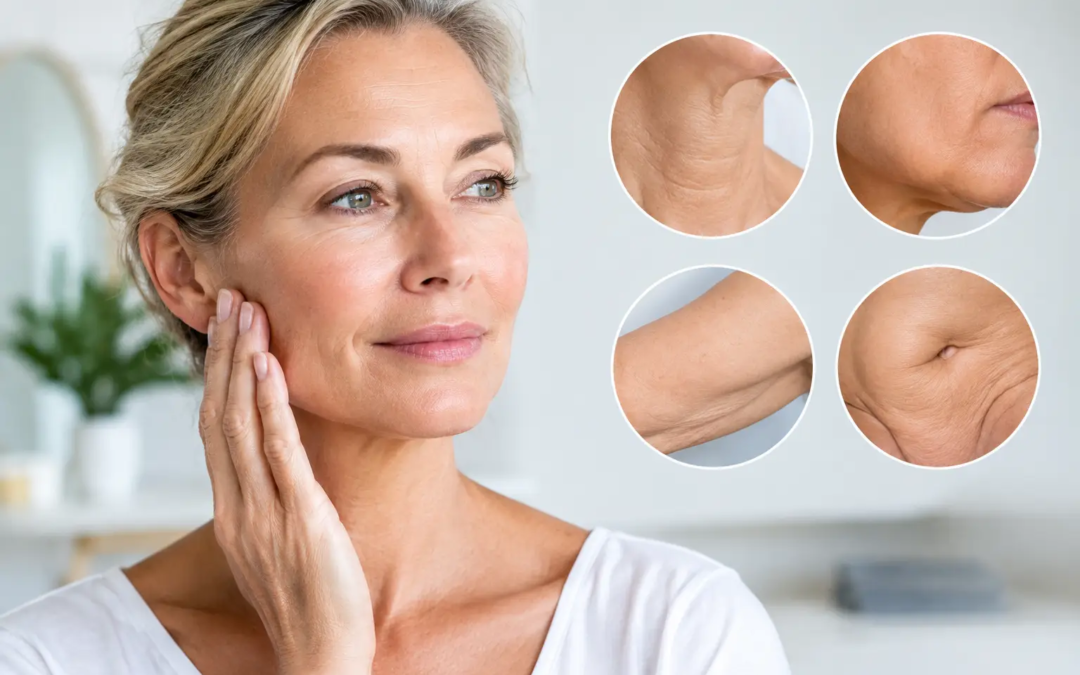
A sharper jawline that suddenly seems softer. Makeup settling differently around the cheeks. Crepey skin on the neck, chest, arms, or knees that does not reflect how energized you feel. Skin laxity is one of the most common concerns we hear from clients who want to look refreshed without looking overdone – or committing to surgery.
The good news is that loose-looking skin is not a single problem with a single solution. It is a change in skin structure, volume, and tissue support that deserves a thoughtful, personalized approach. The right plan can improve firmness, texture, and overall skin quality while still preserving what makes your face look like you.
What Is Skin Laxity?
Skin laxity describes a loss of firmness and elasticity. Healthy skin has a supportive framework made primarily of collagen and elastin. Collagen provides strength and structure, while elastin helps skin stretch and return to place. As these proteins decline and become less organized, skin may begin to feel thinner, softer, or less resilient.
On the face, this can show up as mild jowling, less cheek definition, fine lines, hooding around the eyes, or a neck that no longer appears as smooth or taut as it once did. On the body, clients often notice laxity on the upper arms, abdomen, thighs, knees, and décolletage.
It is worth separating skin laxity from other concerns that can look similar. Volume loss can create hollows or folds. Changes in facial fat pads can alter contour. Sun damage may cause roughness and fine lines that make skin appear less firm. Often, more than one factor is present, which is why an in-person assessment matters before selecting a treatment.
Why Skin Laxity Happens
Aging is the most familiar cause, but it is not the only one. Starting as early as our 20s, collagen production naturally slows. The effect may become more visible in the 30s, 40s, and beyond, especially in areas with thinner skin such as the neck and chest.
Sun exposure is another major contributor in South Florida. Ultraviolet light breaks down collagen and elastin over time, and the effects can accumulate even when a tan fades quickly. Repeated sun exposure without consistent protection can make laxity, uneven tone, and textural changes appear earlier or progress more noticeably.
Weight changes, pregnancy, genetics, smoking, poor sleep, stress, and hormonal shifts can also affect how the skin looks and behaves. Significant weight loss can be a wonderful health milestone, yet it may leave behind skin that needs additional support. Genetics matter, too. Some people maintain firmer-looking skin longer, while others see early changes despite excellent skincare habits.
Why a Personalized Plan Makes the Difference
No device or facial can replace the results of a surgical lift when laxity is advanced. Ethical aesthetic care means being clear about that. Non-surgical treatments are often best for mild to moderate laxity, early prevention, texture concerns, and clients who want gradual, natural-looking improvement with little to no downtime.
The most effective plan also depends on where the concern appears. Facial laxity may call for collagen-stimulating treatment combined with attention to skin quality. Crepey texture on the neck or chest may benefit from a different protocol than looser skin on the arms or abdomen. Your lifestyle, sun exposure, previous treatments, medical history, and timeline all shape the recommendation.
At Medical Advanced Skin Care, treatment planning begins with listening. The goal is never to sell a procedure simply because it is popular. It is to identify what your skin needs now, explain what is realistically possible, and build a plan that supports lasting confidence.
Non-Surgical Options for Firmer-Looking Skin
Focused Ultrasound Skin Tightening
Ultraformer III uses focused ultrasound energy to deliver controlled heat beneath the surface of the skin. This process is designed to stimulate the body’s natural collagen response, helping improve the look of firmness and contour over time. It can be especially appealing for the face, jawline, neck, and selected body areas.
Results are not usually instant because collagen remodeling takes time. Many clients begin to see changes gradually over the following weeks and months. This makes focused ultrasound a strong option for those who prefer a subtle, progressive refinement rather than an abrupt change.
Microneedling for Collagen Support
SkinPen microneedling creates precise microchannels in the skin to trigger its natural repair process. As the skin renews itself, it can become smoother, more even in texture, and better supported by new collagen. Microneedling is particularly valuable when laxity is accompanied by fine lines, acne scarring, enlarged pores, or an overall loss of radiance.
For some clients, PRP may be incorporated into a microneedling protocol to support recovery and enhance the skin-rejuvenation experience. The best choice depends on your skin goals, sensitivity, and treatment history.
Treatments That Improve Skin Quality
Laxity rarely exists in isolation. Dullness, discoloration, rough texture, and dehydration can make skin look older and less firm than it actually is. BroadBand Light, chemical peels, dermaplaning, HydraFacial treatments, and other medical-grade skin services may not create a lifting effect on their own, but they can meaningfully improve the surface quality of the skin.
That distinction is important. A brighter, smoother complexion often makes contour look more refined, while collagen-stimulating treatments address deeper structural support. Combining the right modalities can create a more complete and polished result than relying on one treatment alone.
How to Support Results at Home
Professional care works best when it is supported by consistent daily habits. Sunscreen is the foundation. A broad-spectrum SPF should be part of your routine every day, not only at the beach or pool. South Florida sunshine is beautiful, but long-term UV exposure is one of the clearest accelerators of collagen breakdown.
A medical-grade home regimen can also help protect and strengthen the skin barrier. Depending on your needs, this may include antioxidants in the morning, retinoid-based products in the evening, targeted hydration, and pigment-supporting ingredients. The right products should be selected for your skin, not chosen based on a trend or a friend’s routine.
Healthy habits matter as well. Adequate protein, hydration, sleep, and smoking avoidance support skin health from within. These steps will not tighten significant loose skin by themselves, but they can help you maintain the benefits of professional treatment and support better-looking skin over time.
What Results Can You Expect?
With non-surgical skin tightening, the goal is usually improvement, not perfection. Clients may notice smoother texture, a firmer feel, more defined facial contours, and a healthier overall appearance. Results vary based on age, genetics, the degree of laxity, treatment area, and commitment to maintenance.
Some treatments require a series for the best outcome. Others are performed periodically as part of a long-term aesthetic maintenance plan. Collagen does not rebuild overnight, and it continues to change as we age, so strategic follow-up care is often the most realistic path to preserving your results.
If you are unsure whether your concern is skin laxity, volume loss, sun damage, or a combination of all three, a professional consultation can provide valuable clarity. The best treatment is the one that respects your anatomy, your goals, and your comfort level – while helping you feel more confident each time you see your reflection.