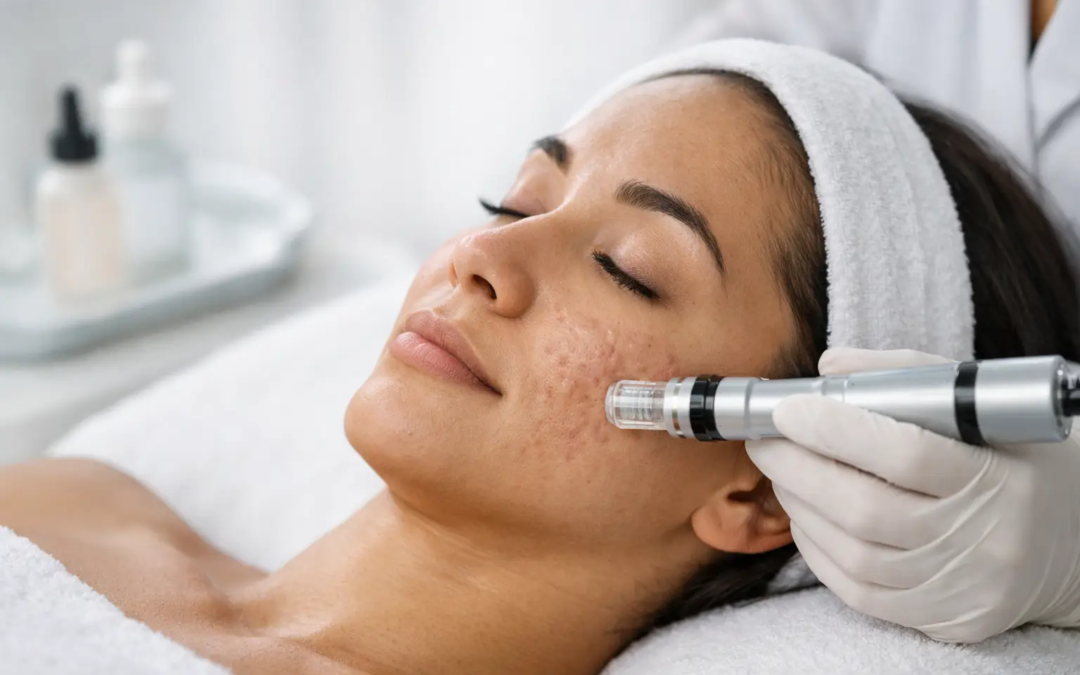
Acne may be long gone, but the texture it leaves behind can keep skin from looking as clear and healthy as you feel. That is exactly why so many patients ask how microneedling helps acne scars. When acne scars create uneven skin, enlarged pores, and rough patches that makeup cannot fully blur, microneedling offers a clinical, non-surgical way to support smoother, more confident skin.
How microneedling helps acne scars
Microneedling works by creating thousands of controlled micro-injuries in the skin with very fine needles. These tiny channels trigger the skin’s natural repair response, which includes increased collagen and elastin production. For acne-scarred skin, that matters because many scars form where collagen has been damaged or lost during inflammation.
As new collagen develops, depressed scars can begin to look softer and less defined. The skin does not change overnight, and it does not erase every scar completely, but it often becomes smoother, firmer, and more even over time. That gradual improvement is one reason microneedling remains a trusted option for patients who want real results without surgery or extensive downtime.
The treatment is especially helpful for atrophic acne scars, which are the indented scars that sit below the surface of the skin. These include rolling scars, boxcar scars, and some ice pick scars, although deeper ice pick scarring may need a combination approach. Microneedling can also improve overall skin quality around the scars, so the complexion looks healthier even before every mark has fully faded.
Why collagen is the key to scar repair
Acne scars are not only a surface issue. In many cases, they reflect structural changes deeper in the skin. When inflammation from acne breaks down collagen, the skin can heal unevenly, leaving dips or irregular texture behind.
Microneedling addresses that deeper support system. By stimulating collagen remodeling, it encourages the skin to rebuild itself from within rather than simply coating the top layer. This is why the results tend to look natural. Instead of creating a temporary cosmetic effect, the treatment helps the skin function more like healthier skin again.
That said, collagen production takes time. Most patients notice progressive changes over several weeks, with continued improvement after a series of treatments. The timeline depends on the severity of the scarring, skin type, age, and whether other treatments are part of the plan.
What kinds of acne scars respond best?
Not every acne scar behaves the same way, so treatment should never be one-size-fits-all. Microneedling is often a strong choice for shallow to moderate indented scars and textural irregularities. Rolling scars frequently respond well because the skin can look more even as collagen builds beneath the depressed areas.
Boxcar scars can also improve, especially when they are not extremely deep. Ice pick scars are more challenging because they extend deeper and narrower into the skin. In those cases, microneedling may still help the surrounding texture, but a provider may recommend combining it with other in-office treatments for a better outcome.
Microneedling is not typically the first solution for raised acne scars, such as hypertrophic scars or keloids. Those require a different strategy. This is where a professional consultation matters. The right treatment plan depends on the type of scar, your skin tone, your history of breakouts, and how aggressive or gentle your skin can safely tolerate.
What to expect during treatment
A professional microneedling appointment is designed to be precise, comfortable, and tailored to your skin. After the skin is cleansed, a topical numbing agent is usually applied to reduce discomfort. Once the skin is prepared, the device is passed across the treatment area at settings chosen for your goals and skin condition.
The sensation is often described as a light vibration or a prickling pressure rather than sharp pain. Acne scar treatment may require slightly deeper settings than a general glow-focused microneedling session because the goal is to remodel texture, not just refresh the surface.
After treatment, the skin usually looks pink to red, similar to a mild sunburn. Some patients feel warm, tight, or slightly dry for a day or two. Most return to normal routines quickly, although exercise, heat exposure, and active skincare products are usually paused briefly while the skin recovers.
How many sessions are usually needed?
This is one of the most common questions, and the honest answer is that it depends. Acne scars generally need a series of treatments because collagen remodeling happens gradually. Mild textural scarring may respond well after three sessions, while more visible or longstanding scars often need four to six or more.
Treatments are usually spaced several weeks apart to allow the skin time to heal and build new collagen. Trying to rush the process does not improve results. A more thoughtful schedule tends to produce a smoother, more balanced outcome.
Maintenance can also matter. Once the deeper scars have improved, some patients continue periodic microneedling to support collagen, texture, and overall skin quality. This can be especially appealing for those who want to keep their skin looking refined and healthy over time.
The benefit of SkinPen microneedling for acne scars
Device quality matters in aesthetic medicine. Professional systems such as SkinPen are designed for controlled, consistent treatment, which is important when you are working on scarred skin. Precision helps create a more even response and supports safety across different areas of the face.
In a medical aesthetics setting, microneedling is also adjusted to your needs rather than performed as a generic facial. Depth, technique, and treatment frequency all influence the outcome. For acne scars, those details can make the difference between modest improvement and meaningful change.
At Medical Advanced Skin Care, this kind of customization is central to the experience. Acne scarring is evaluated in the context of your full skin picture, including sensitivity, discoloration, active breakouts, and long-term goals, so treatment feels intentional rather than standardized.
Microneedling and acne marks are not the same issue
Many people use the term acne scars to describe any mark left behind by acne, but there is an important difference between true scars and post-inflammatory discoloration. Brown marks, red spots, and lingering pigmentation are not the same as indented scarring.
Microneedling can help with both texture and some visible tone concerns, but the mechanism is different. For scars, the goal is collagen remodeling. For discoloration, the improvement often comes from healthier skin turnover and overall rejuvenation. Patients with deeper pigment concerns may benefit from combining microneedling with other professionally selected treatments, especially if melasma or post-inflammatory hyperpigmentation is present.
This is another reason personalized treatment planning matters. The skin may look scarred when the main issue is actually pigment, or it may have both. Treating the wrong concern can lead to frustration, even when the treatment itself is excellent.
Is microneedling safe for all skin tones?
One reason microneedling is so widely respected is that it can be a good option for a broad range of skin tones when performed appropriately. Some resurfacing treatments carry a higher risk of pigment complications for deeper skin tones, but microneedling is often considered a more versatile choice because it does not rely on heat in the same way certain laser treatments do.
Still, safe does not mean casual. Technique, device quality, aftercare, and timing all matter. Skin that is inflamed, actively breaking out, sunburned, or not properly prepped may not be ready for treatment. Patients with darker skin tones also benefit from thoughtful planning to minimize the risk of post-inflammatory pigment changes.
Why at-home rollers are not the same
Home microneedling tools can sound tempting, especially when acne scars affect confidence and patience wears thin. But these tools are not equivalent to a professional treatment. They do not offer the same needle quality, depth control, sterility, or clinical assessment.
Used incorrectly, at-home devices can irritate the skin, spread bacteria, worsen active acne, or create uneven results. Scar treatment is not just about making tiny punctures. It is about using the right depth, the right pattern, and the right timing for your specific skin.
For patients investing in their skin, professional care is usually the better path. It is more strategic, more controlled, and more likely to produce visible improvement safely.
Aftercare shapes your results
What you do after microneedling affects how well your skin recovers. Gentle cleansing, hydration, sun protection, and avoiding irritating products are essential in the first few days. Skin often feels more sensitive during this window, and overdoing your routine can interfere with healing.
Sun exposure deserves special attention in South Florida. Freshly treated skin is more vulnerable, and unprotected UV exposure can work against the progress you are trying to make. Daily sunscreen is not optional when you are treating acne scars and investing in collagen-focused procedures.
A good provider will also look at the bigger picture. If acne is still active, controlling breakouts is part of protecting your results. There is little value in improving old scars while new inflammation continues to create more.
Microneedling can be an excellent choice for acne scars because it treats the skin with precision and patience, encouraging it to rebuild where damage once lived. For many patients, that means not just smoother texture, but the relief of finally seeing skin move in the right direction.