Some skin treatments leave you red, dry, and wondering when the glow is supposed to show up. Others give you that polished, refreshed look almost immediately. When clients ask about hydrafacial vs microdermabrasion benefits, they are usually trying to answer a very practical question: which treatment will give me the best result for my skin right now?
The honest answer is that both can improve texture, dullness, and congestion, but they do it in different ways. One is more focused on resurfacing through physical exfoliation. The other combines cleansing, exfoliation, extraction, and hydration in a single treatment. If your goal is healthy, radiant skin with a plan that actually fits your skin type, the difference matters.
HydraFacial vs Microdermabrasion Benefits: The Core Difference
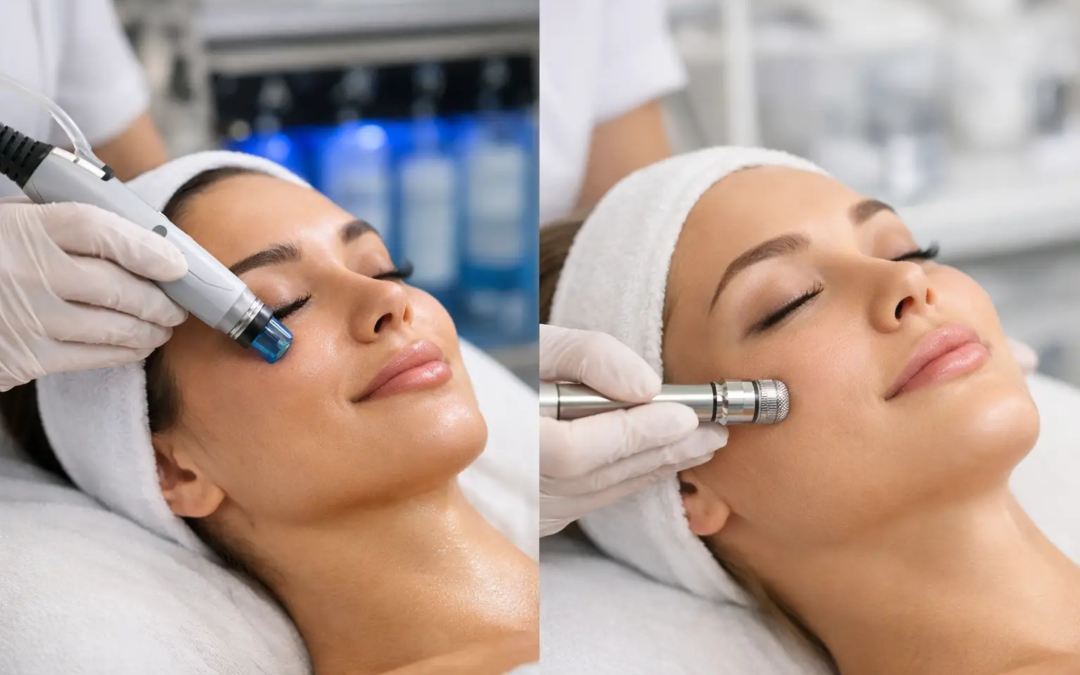
Microdermabrasion is a mechanical exfoliation treatment. It removes the outermost layer of dead skin cells to help soften rough texture, brighten tone, and support cell turnover. It has been a long-standing favorite for clients who want skin to feel smoother and look more refined.
HydraFacial takes a broader approach. Instead of focusing only on exfoliation, it uses a multi-step process to cleanse, loosen debris, extract impurities, and infuse the skin with hydrating and nourishing serums. That combination is why many clients see it as both corrective and restorative.
In simple terms, microdermabrasion resurfaces. HydraFacial resurfaces and replenishes. Neither is universally better. The best choice depends on your skin condition, your sensitivity level, and the kind of result you want after treatment.
What Microdermabrasion Does Best
Microdermabrasion is especially appealing for skin that feels rough, looks dull, or has mild surface irregularities. Because it physically buffs away dead skin buildup, it can leave the skin looking fresher and feeling noticeably smoother after a series of treatments.
This treatment is often a strong option for clients concerned with minor textural issues, superficial sun damage, and early signs of uneven skin tone. It can also help skincare products absorb more effectively by removing the layer of buildup that sits on the surface.
There is a reason microdermabrasion has remained popular for years. It is straightforward, effective, and familiar. For the right candidate, it can be an excellent maintenance treatment.
That said, there are trade-offs. Because it relies on physical exfoliation, it may not be the best fit for very reactive, inflamed, or highly sensitive skin. If someone is dealing with active rosacea, a compromised skin barrier, or significant post-inflammatory irritation, a gentler and more hydrating option may be the better choice.
Where HydraFacial Stands Out
HydraFacial is often chosen by clients who want visible results without the dry, over-processed feeling that can happen with more aggressive exfoliation. It is particularly well suited for dehydrated skin, congested pores, and tired-looking skin that needs both refinement and hydration.
One of the biggest hydrafacial vs microdermabrasion benefits is that HydraFacial addresses multiple concerns in one appointment. It exfoliates, but it also performs extractions in a way that is often more comfortable than traditional manual methods. Then it replenishes the skin with targeted serums designed to support hydration, clarity, and radiance.
For clients preparing for an event, meeting, vacation, or photo session, this can be a major advantage. Skin often looks cleaner, brighter, and more luminous right away, with little to no downtime. That immediate polished finish is one reason HydraFacial has become such a go-to treatment in medical aesthetics.
It is also a strong option for people who want consistency. When performed as part of a regular treatment plan, HydraFacial can support smoother texture, clearer-looking pores, and a more balanced, healthy appearance over time.
Which Treatment Is Better for Acne and Congestion?
If clogged pores, blackheads, and oily buildup are the main concern, HydraFacial often has the edge. The extraction step helps clear debris from the pores while the hydration step helps keep the skin from feeling stripped afterward. For many acne-prone clients, that balance matters.
Microdermabrasion can still be helpful for post-acne texture and dullness, but it is not always the first choice for active breakouts, especially if the skin is inflamed. Physical exfoliation over active acne can sometimes be too stimulating, depending on the severity and sensitivity of the skin.
This is where an individualized consultation makes a difference. Acne is not one condition with one solution. Some clients need gentle exfoliation and deep cleansing. Others need a more comprehensive plan that may include chemical peels, light-based treatments, or professional homecare support in addition to facials.
Which Is Better for Fine Lines and Early Aging?
Both treatments can improve the look of aging skin, but they do so differently.
Microdermabrasion helps by smoothing the skin’s surface. That can soften the appearance of fine lines caused by rough texture and dryness. Skin may look brighter and more even, which often makes it appear more youthful overall.
HydraFacial helps by improving hydration and surface clarity while also supporting a healthier glow. Fine lines tend to look more noticeable when the skin is dehydrated, so plumping the skin with moisture can create a smoother, fresher appearance. For clients who want to look rested rather than treated, HydraFacial often delivers that effect very well.
If aging concerns are more advanced, neither treatment should be presented as a complete solution on its own. Deeper wrinkles, skin laxity, and more pronounced pigment changes may respond better when facials are part of a broader skin rejuvenation plan.
Sensitivity, Downtime, and Comfort
This is often where the decision becomes easier.
If your skin is sensitive, easily flushed, or prone to dryness, HydraFacial is frequently the more comfortable experience. It is known for leaving skin refreshed rather than raw. Many clients describe it as a treatment that feels both clinical and relaxing, which is a rare combination.
Microdermabrasion can still be very appropriate, but it tends to be better suited to skin that tolerates exfoliation well. Some temporary redness or sensitivity can occur afterward, especially if the skin is already dry or if active ingredients are introduced too quickly at home.
In a professional setting, comfort is not separate from results. A treatment that matches your skin barrier and recovery capacity usually performs better in the long run than one that pushes too hard.
How to Choose Between HydraFacial and Microdermabrasion
The best treatment starts with your main goal.
If you want smoother surface texture and a classic exfoliating refresh, microdermabrasion may be the better fit. If you want exfoliation plus hydration, pore cleansing, and that immediate healthy-skin finish, HydraFacial is often the more versatile choice.
Your skin type matters just as much as your goal. Oily, resilient skin may do well with either treatment depending on the concern. Dry, reactive, or mature skin often responds especially well to a HydraFacial approach because hydration is built into the treatment rather than treated as an afterthought.
Frequency matters too. Some clients do best with one signature treatment repeated consistently. Others benefit from alternating services across seasons or skin changes. In South Florida, where heat, humidity, sun exposure, and lifestyle can all affect the skin, flexibility is often the smartest strategy.
At Medical Advanced Skin Care, that is the philosophy behind treatment planning. The goal is not to push a trendy service. It is to recommend the treatment that makes sense for your skin, your comfort level, and the result you want to see in the mirror.
The Real Benefit Is the Right Match
When people compare hydrafacial vs microdermabrasion benefits, they are usually hoping for a clear winner. In practice, the better answer is more personal than that.
Microdermabrasion offers dependable resurfacing for skin that needs smoothing and brightening. HydraFacial offers a more comprehensive refresh for skin that needs cleansing, hydration, and visible radiance with minimal downtime. Both have value. The difference is knowing which one supports your skin instead of simply doing more to it.
Healthy skin rarely comes from a one-size-fits-all treatment. It comes from expert guidance, thoughtful timing, and choosing care that leaves your skin stronger, clearer, and more confident after every visit.