Pigmentation rarely shows up in a way that feels simple. One summer of sun exposure, a few post-acne marks, hormonal changes, or skin irritation can leave behind uneven patches that makeup does not fully blur and skincare at home only partly improves. Understanding how chemical peels reduce pigmentation helps explain why this treatment remains one of the most trusted options for brighter, more even-looking skin.
At its best, a chemical peel is not about harshness. It is about precision. When selected correctly for your skin tone, sensitivity level, and type of discoloration, a peel encourages controlled exfoliation so damaged, pigmented surface cells shed more efficiently. That process can help soften visible discoloration and support healthier skin renewal over time.
How chemical peels reduce pigmentation in the skin
Pigmentation develops when melanin becomes unevenly distributed or overproduced in certain areas. This can happen after acne, from cumulative UV exposure, with melasma, or after inflammation from heat, friction, or cosmetic irritation. The result is skin that looks blotchy rather than clear and balanced.
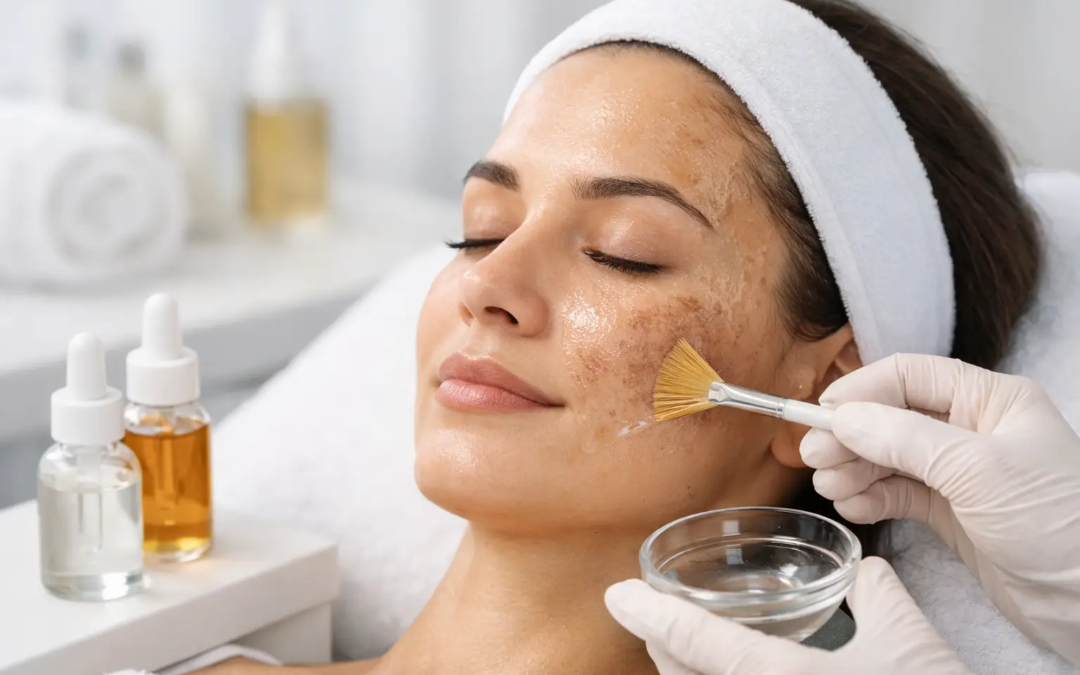
Chemical peels work by applying a specialized acid solution to the skin to loosen the bonds between older cells. As those cells exfoliate, pigmented buildup on the surface starts to lift away. At the same time, skin turnover increases, which helps bring fresher, less damaged skin forward.
This is the core of how chemical peels reduce pigmentation – they do not bleach the skin or erase melanin instantly. Instead, they gradually reduce the appearance of discoloration by removing unevenly pigmented cells and encouraging a more uniform regeneration process. For many patients, that means a brighter tone, smoother texture, and a more refined overall look.
The depth of the peel matters. Superficial peels target the epidermis, where many sun spots and post-inflammatory marks sit. Medium-depth peels reach further and may improve more stubborn discoloration, but they also come with more downtime and require a more careful recovery plan. The right choice depends on the cause of your pigmentation, your skin history, and how aggressively your skin can be treated safely.
Not all pigmentation responds the same way
This is where professional guidance matters. Pigmentation is a broad term, but the treatment approach should never be broad.
Sun damage often responds well to a series of superficial or blended peels because much of the discoloration is closer to the surface. Post-acne marks can also improve nicely, especially when texture concerns are present alongside discoloration. Melasma is more nuanced. It can improve with the right peel strategy, but it is also easily triggered by heat, hormones, and inflammation, so over-treating it can make the issue worse instead of better.
Darker skin tones can absolutely benefit from chemical peels, but peel selection has to be thoughtful. The wrong formula or depth may increase the risk of post-inflammatory hyperpigmentation. A personalized treatment plan is not a luxury in this context. It is part of safe, results-driven care.
What makes a peel effective for discoloration
A good peel is not simply strong. It is appropriate.
Different acids work differently in the skin. Glycolic acid is often used to brighten and smooth by accelerating exfoliation. Lactic acid can be a gentler option for dullness and mild uneven tone. Salicylic acid is useful when acne and pigment are linked, since it helps clear oil and congestion while supporting turnover. TCA peels can address more visible sun damage and deeper discoloration, but they require greater caution and aftercare.
In many clinical settings, providers use customized peel blends to address multiple concerns at once. That matters because pigmentation rarely comes alone. Patients often want improvement in clarity, pores, rough texture, fine lines, or post-breakout skin quality at the same time.
An effective plan also looks beyond the treatment room. If the skin is being irritated by active breakouts, harsh products, or daily sun exposure, pigment will keep getting triggered. Peels can move progress forward, but they work best when the environment around the skin supports healing.
How many treatments does it take?
This is one of the most common questions, and the honest answer is that it depends. Some patients notice a fresher, brighter look after one peel, especially when dull surface discoloration is the main issue. More established pigmentation usually improves in a series.
For many forms of uneven tone, a provider may recommend treatments spaced several weeks apart. Gradual improvement is often safer and more predictable than trying to force dramatic change in a single session. This is especially true with melasma-prone skin or patients with a history of sensitivity.
Chemical peels are often most rewarding for patients who understand that pigmentation correction is a process. The visible discoloration can fade, but if the underlying trigger remains active, maintenance may still be needed. In South Florida, where UV exposure is a year-round reality, sun protection is part of the treatment plan, not an afterthought.
What to expect after a peel
Most patients experience some combination of tightness, dryness, mild redness, and visible flaking, depending on the peel used. Not every peel produces dramatic peeling. In fact, some of the most elegant professional treatments work with minimal visible shedding while still improving tone and texture.
During recovery, the skin is temporarily more vulnerable. Picking, scrubbing, overusing active products, or skipping sunscreen can interfere with results and raise the risk of irritation or rebound pigmentation. Aftercare is where a lot of peel success is either protected or compromised.
Patients are often surprised to learn that the goal is not to strip the skin. Healthy recovery leads to better long-term results than aggressive exfoliation. Medical-grade guidance on cleanser choice, moisturization, sun protection, and when to restart ingredients like retinol can make a meaningful difference.
How chemical peels reduce pigmentation compared with other treatments
Chemical peels are not the only option for discoloration, and that is a good thing. Some pigment responds best to combination treatment.
Light-based treatments can be very effective for certain kinds of sun damage, but they are not ideal for everyone, especially when melasma or heat sensitivity is part of the picture. Microneedling may help when post-acne discoloration overlaps with texture and scarring. Prescription topicals can suppress pigment formation, which makes them a strong partner to in-office treatments.
What makes peels so consistently valuable is their versatility. They can be adjusted in strength, repeated strategically, and paired with a broader skin health plan. For patients who want visible brightening without surgery or significant interruption to daily life, peels often sit in that sweet spot between effective and manageable.
At Medical Advanced Skin Care, this is why personalization matters so much. A peel should fit your skin rather than forcing your skin to fit a preset protocol.
Who is a good candidate?
Good candidates usually include patients bothered by sun spots, post-acne marks, uneven tone, dullness, or mild textural roughness. They are often looking for results that feel polished and noticeable, but still natural. Many also appreciate that chemical peels can be integrated into a broader rejuvenation plan instead of functioning as a standalone fix.
That said, not everyone should be treated immediately. Active irritation, certain medications, recent sunburn, open lesions, and some skin conditions may require postponing treatment. The same goes for anyone who wants fast pigment correction but is not prepared to follow post-care instructions. Skin responds best when expectations and timing are realistic.
A thoughtful consultation should cover more than the surface discoloration itself. It should address your skin type, history of sensitivity, daily routine, sun habits, prior treatments, and what kind of downtime feels workable for your lifestyle. That is how treatment becomes both safer and more successful.
The real value of a customized plan
When patients ask whether chemical peels work for pigmentation, the better question is which peel, at what strength, in what series, with what prep and aftercare. That is where real results come from.
A customized plan may include pigment-safe skincare before treatment, a series of lighter peels instead of one aggressive peel, or combining peels with other services at the right stage of your skin journey. It may also include saying no to a peel if your skin needs barrier repair first. Ethical recommendations are part of quality aesthetic care.
Pigmentation can be frustrating because it often changes slowly. The upside is that steady, medically guided improvement can create skin that looks clearer, calmer, and more even in a way that lasts longer than a quick fix. When treatment is chosen with care, brighter skin is not just possible. It becomes much more predictable.