Some acne clears and quietly moves on. Scars do not. They can change the way light hits your skin, the way makeup sits, and sometimes the way you feel when you look in the mirror. If you are researching the best treatments for acne scars, the most important thing to know is that there is no single best option for everyone. The right treatment depends on the type of scar, your skin tone, your history with breakouts, and how much downtime you are comfortable with.
That is why effective scar treatment starts with diagnosis, not guesswork. Acne scars are not all the same, and treating the wrong type with the wrong approach often leads to frustration. Some scars need collagen stimulation. Others respond better to controlled resurfacing. In many cases, the best results come from combining treatments over time rather than expecting one appointment to do everything.
What makes acne scars hard to treat
Acne scars form when inflammation damages the deeper structure of the skin. As the skin heals, it may produce too little collagen, which creates depressed scars, or too much, which creates raised scars. The challenge is that scar tissue does not behave like healthy skin. It is more rigid, less uniform, and often paired with discoloration that can make texture issues look even more noticeable.
There is also a difference between true scarring and post-acne marks. Brown spots, red marks, and lingering pigmentation after a breakout are common, but they are not the same as ice pick, boxcar, or rolling scars. Pigment can often improve faster than texture. If you are dealing with both, your treatment plan may need to address each concern differently.
Best treatments for acne scars by scar type
The phrase best treatments for acne scars sounds straightforward, but the answer changes based on what you see in the mirror.
Microneedling for rolling and mild boxcar scars
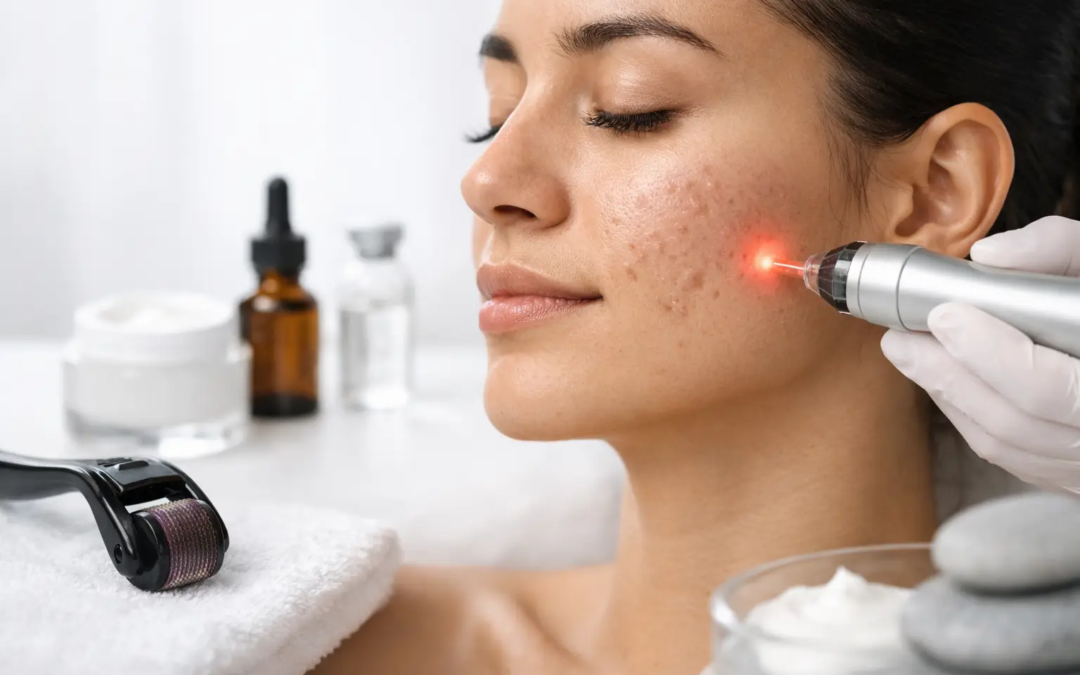
Microneedling is one of the most reliable options for improving shallow to moderate atrophic scars, especially rolling scars and some boxcar scars. By creating controlled micro-injuries in the skin, microneedling triggers collagen production and gradual remodeling. Over a series of treatments, skin texture can look smoother, firmer, and more even.
This is one reason SkinPen microneedling remains such a popular choice in medical aesthetics. It is effective, non-surgical, and suitable for many skin types when performed professionally. Results are not instant, though. Most people need a series, and improvement continues as collagen develops over several weeks. If your scars are deep and sharply defined, microneedling may help, but it may not be enough on its own.
Chemical peels for discoloration and surface irregularity
Chemical peels are especially helpful when acne scars are paired with post-inflammatory hyperpigmentation, rough texture, or dullness. A professional peel works by exfoliating damaged surface layers and encouraging healthier skin turnover. This can soften the appearance of shallow scarring while brightening the overall complexion.
The trade-off is that peels are better for superficial concerns than for deep indentations. They can be an excellent supporting treatment in a broader acne scar plan, especially for clients who want brighter, smoother skin with a refreshed look. The right peel strength matters. Stronger is not always better, particularly in skin that is prone to pigment changes.
Laser and light-based treatments for resurfacing and tone
Laser resurfacing can be very effective for certain acne scars because it targets texture more aggressively and stimulates collagen remodeling at a deeper level. Some laser approaches focus more on resurfacing the surface, while others go deeper to help improve scar depth and irregularity.
For clients with lingering redness or pigmentation after acne, light-based treatments may also play a role in improving the overall look of scarred skin. Still, not every laser or light treatment is right for every skin tone or scar type. In South Florida especially, where sun exposure is part of daily life, treatment timing and post-care are important. Skin must be protected carefully to support healing and reduce the risk of unwanted pigment changes.
PRP with microneedling for enhanced healing support
PRP, often paired with microneedling, uses your body’s own growth factors to support recovery and skin renewal. This combination can be a strong option for clients who want to improve texture while also supporting a healthier healing response. It is not a miracle add-on, but for some patients, it can enhance the results of collagen-induction treatments and improve the overall quality of the skin.
The best candidates are often those with early to moderate textural scarring who want a regenerative approach with minimal downtime compared with more aggressive resurfacing.
Subcision and combination approaches for tethered scars
Some rolling scars are tethered down by fibrous bands beneath the skin. In these cases, the surface indentation is not just a collagen issue. It is structural. That is where subcision, a technique that releases those bands under the skin, can be valuable. It is often combined with other treatments like microneedling or resurfacing for better overall results.
This is a good example of why a personalized plan matters. If a scar is physically anchored below the surface, a peel alone will not meaningfully change it. Understanding the mechanism behind the scar leads to better treatment choices.
How to choose the best treatment plan for acne scars
The best treatment plan usually balances four things: scar type, skin tone, active acne status, and downtime.
If you still have active breakouts, that often needs attention first. Treating scars while new acne continues to inflame the skin can slow progress and create new marks. If your skin is sensitive or prone to hyperpigmentation, your provider may recommend a more gradual approach to protect your results. If your schedule does not allow for visible recovery, that also affects which options make sense.
For many adults, a series-based approach works best. Microneedling may be used to build collagen over time, with carefully selected peels added to improve tone and surface smoothness. Others may need a more advanced resurfacing plan. The key is being honest about expectations. Acne scars can improve dramatically, but complete erasure is rarely the goal. Better texture, softer shadowing, smoother makeup application, and more even-looking skin are realistic and meaningful outcomes.
What to expect from professional acne scar treatment
Most professional acne scar treatments are gradual by design. Skin remodeling takes time. You may notice an early glow or smoother feel after a treatment, but structural improvement usually develops over a series of visits. Photos can be especially helpful because the change is often easier to see over months than day to day.
Downtime varies. Microneedling may leave the skin pink and slightly sensitive for a short period. Peels can cause flaking or dryness depending on intensity. More aggressive resurfacing usually comes with more recovery. Good aftercare matters just as much as the treatment itself. Sun protection, barrier support, and the right home care products can protect the progress you are making in the treatment room.
When in-office care is worth it
Over-the-counter products can help with post-acne marks, mild uneven tone, and general skin maintenance, but true acne scars usually need professional treatment. Texture changes caused by collagen loss or scar tethering do not respond well to creams alone. This is where in-office care offers a real advantage. It allows for a treatment plan built around your skin rather than a one-size-fits-all solution.
At a clinic like Medical Advanced Skin Care, that personalized approach matters. A thoughtful consultation can identify whether your skin would respond best to microneedling, peels, regenerative support, or a combination strategy designed to improve both texture and tone. That kind of plan tends to be more efficient, more realistic, and far more reassuring than chasing trends online.
Best treatments for acne scars start with the right evaluation
If there is one takeaway, it is this: the best treatments for acne scars are the ones matched carefully to your skin, your scar pattern, and your goals. What works beautifully for one person may underperform for another. Scar treatment is not about choosing the most dramatic procedure. It is about choosing the most appropriate one.
Clearer, smoother-looking skin often comes from steady progress, not quick fixes. When treatment is customized and expectations are grounded in real skin biology, acne scars can become far less noticeable and much less central to how you see yourself.