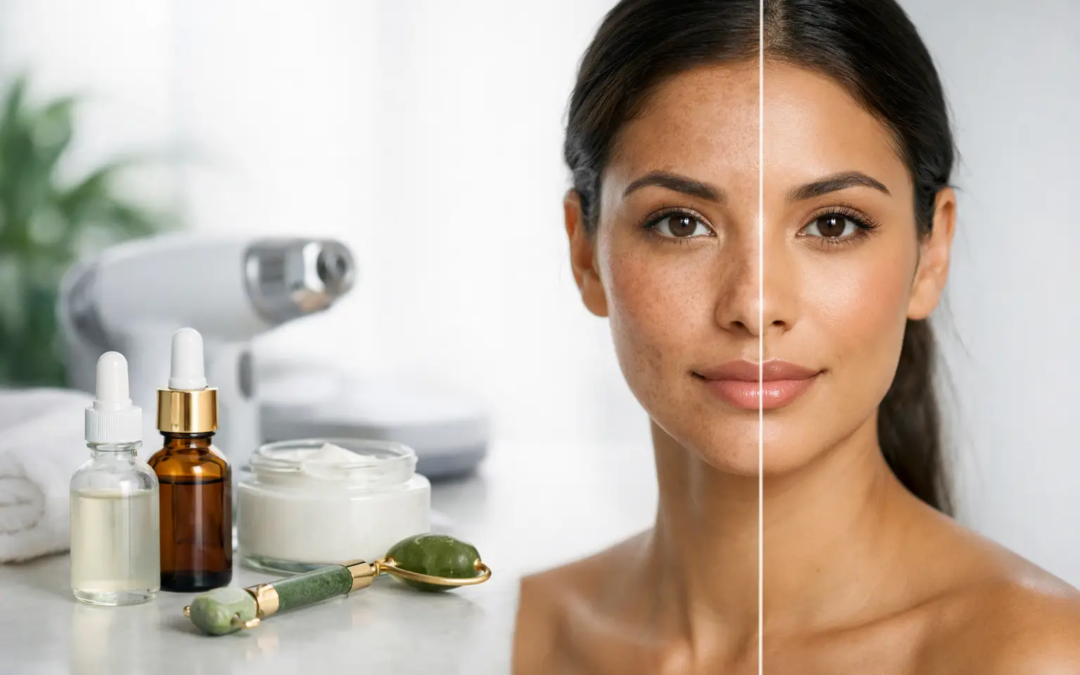
You usually notice uneven skin tone in the least forgiving places – car mirrors, phone cameras, bright bathroom lighting. What looked like a little sun damage can start to read as patchiness, redness, post-acne marks, or a general loss of clarity. The good news is that the best treatments for uneven skin tone can do far more than temporarily brighten the surface. With the right plan, skin can look clearer, smoother, and more even in a way that feels natural.
Uneven tone is not one single problem, which is why there is no one-size-fits-all fix. For some people, the issue is brown pigmentation from sun exposure or melasma. For others, it is lingering acne discoloration, diffuse redness, dullness from buildup, or textural irregularity that makes tone look less uniform. The most effective treatment approach starts with identifying what is actually causing the unevenness.
What causes uneven skin tone?
In South Florida, sun exposure is one of the biggest contributors. UV damage can trigger excess pigment production, making freckles, sunspots, and larger areas of discoloration more visible over time. Even diligent sunscreen users may notice tone changes if they spend years driving, walking outdoors, or enjoying the water.
Hormones also play a role, especially with melasma. This type of pigmentation often appears as symmetrical patches on the cheeks, forehead, or upper lip, and it can be more stubborn than standard sunspots. Heat can worsen it, which matters in a warm, humid climate.
Post-inflammatory hyperpigmentation is another common cause. After acne, irritation, or even a skin injury, the skin can leave behind dark marks that linger long after the original issue is gone. Redness from sensitivity, rosacea, or broken capillaries can create a similar uneven effect, even when pigment is not the main problem.
Texture matters too. Dry buildup, enlarged pores, and roughness can scatter light unevenly, making skin look dull or blotchy. In those cases, improving skin renewal can make tone appear more refined.
Best treatments for uneven skin tone in a professional setting
Professional treatment tends to work best when it is matched to the type of discoloration involved. A personalized plan often combines more than one modality over time, especially if the skin has both pigment and texture concerns.
Chemical peels for dullness, acne marks, and pigment
Chemical peels remain one of the most reliable treatments for uneven tone because they encourage controlled exfoliation and healthy cell turnover. When the outer layer of damaged skin sheds more efficiently, discoloration can gradually soften and the complexion can look brighter.
Lighter peels can refresh dull skin and improve mild post-acne marks with minimal downtime. Medium-depth options, including advanced peel protocols such as the Miami Peel, can be more effective for visible pigmentation and texture concerns. The trade-off is that stronger peels require more recovery and must be selected carefully, especially for skin prone to sensitivity or post-inflammatory pigment.
A peel is rarely a magic one-time fix. Results often build through a series, and maintenance matters. But for many patients, it is one of the most efficient ways to improve clarity and radiance.
BBL for sun damage and redness
BroadBand Light, or BBL, is often an excellent choice for uneven tone caused by sunspots, vascular redness, and diffuse discoloration. It uses light energy to target pigment and redness beneath the skin without surgery or significant interruption to daily life.
This treatment can be especially helpful if your skin tone concerns show up as scattered brown spots, visible sun damage, or a flushed appearance that makeup never fully covers. BBL can also improve overall skin quality, which is one reason patients often describe their skin as looking clearer and more polished after a series.
That said, not every pigmentation issue responds the same way. Melasma requires extra caution because heat-based or light-based treatments can aggravate it in some cases. This is where an expert assessment matters. The best device is not simply the newest one – it is the one that fits your skin safely.
Microneedling for post-acne discoloration and texture
Microneedling, including SkinPen, can be a strong option when uneven tone is tied to acne recovery, superficial scarring, and rough texture. By creating controlled micro-injuries, the skin is stimulated to produce collagen and renew itself more effectively.
What patients often appreciate about microneedling is that it addresses tone and texture together. Skin may look smoother, fresher, and more even as post-inflammatory marks fade and collagen support improves. It can also be paired with regenerative add-ons such as PRP for patients who want a more comprehensive rejuvenation approach.
Results are gradual, not overnight. If you want a dramatic correction in one appointment, this may feel too slow. But if you are looking for progressive, natural-looking improvement with minimal invasiveness, it can be a smart part of a treatment plan.
HydraFacial and dermaplaning for instant brightness
If the skin looks uneven because of congestion, dryness, or surface buildup, treatments like HydraFacial and dermaplaning can make a visible difference quickly. These options do not replace corrective care for deeper pigmentation, but they are excellent for restoring glow and helping the skin reflect light more evenly.
HydraFacial deeply cleanses, exfoliates, and infuses the skin with targeted serums, which can leave the complexion smoother and more luminous right away. Dermaplaning removes dead surface cells and fine facial hair, creating a cleaner canvas and a brighter finish.
These treatments are ideal when you want immediate refreshment with little to no downtime. They are also useful as part of ongoing maintenance between more corrective services.
The best treatments for uneven skin tone at home
In-clinic treatments do a great deal of the heavy lifting, but home care has a direct effect on how well results hold. Without the right skincare, pigmentation often returns faster and progress can stall.
Daily sunscreen is non-negotiable. This is true even if you spend most of the day indoors, because incidental UV exposure adds up. For patients treating discoloration, sunscreen is not just prevention – it is part of the treatment itself.
Medical-grade skincare can also help support a more even complexion. Depending on your skin, ingredients such as vitamin C, retinoids, pigment-correcting agents, and gentle exfoliants may be appropriate. The key is customization. Overusing strong products can trigger irritation, which may worsen the very unevenness you are trying to correct.
This is where many people get frustrated. They buy several brightening products, layer everything at once, and end up with reactive skin. A simpler, targeted routine tends to be more effective than an aggressive one.
How to choose the right treatment
The right treatment depends on what your skin is showing and how much downtime you are willing to accept. If your main concern is sun damage and redness, BBL may offer the most direct path. If acne marks and texture are the issue, microneedling may be the better fit. If you want brighter skin with minimal downtime, a HydraFacial, dermaplaning, or a lighter peel may be ideal.
Skin tone, sensitivity, lifestyle, and treatment history all matter. So does timing. If you have an event coming up, a treatment with visible peeling may not be your first choice. If you want long-term correction, a series may be more realistic than expecting one session to do everything.
A thoughtful consultation should feel honest, not pushy. In a results-driven clinic such as Medical Advanced Skin Care, the goal is to create a plan that respects your skin, your schedule, and your comfort level while still moving you toward visible improvement.
When patience pays off
Uneven skin tone often develops gradually, and it usually improves the same way. The most satisfying results tend to come from a strategic combination of professional treatment, consistent home care, and proper sun protection. That approach may take more time than a quick fix, but it is also what helps skin look healthier rather than overtreated.
If your complexion has started to look blotchy, dull, or less balanced than it used to, that is not something you have to simply accept. With the right guidance, clearer and more even-looking skin is a realistic goal, and the path there can feel every bit as refined as the results.