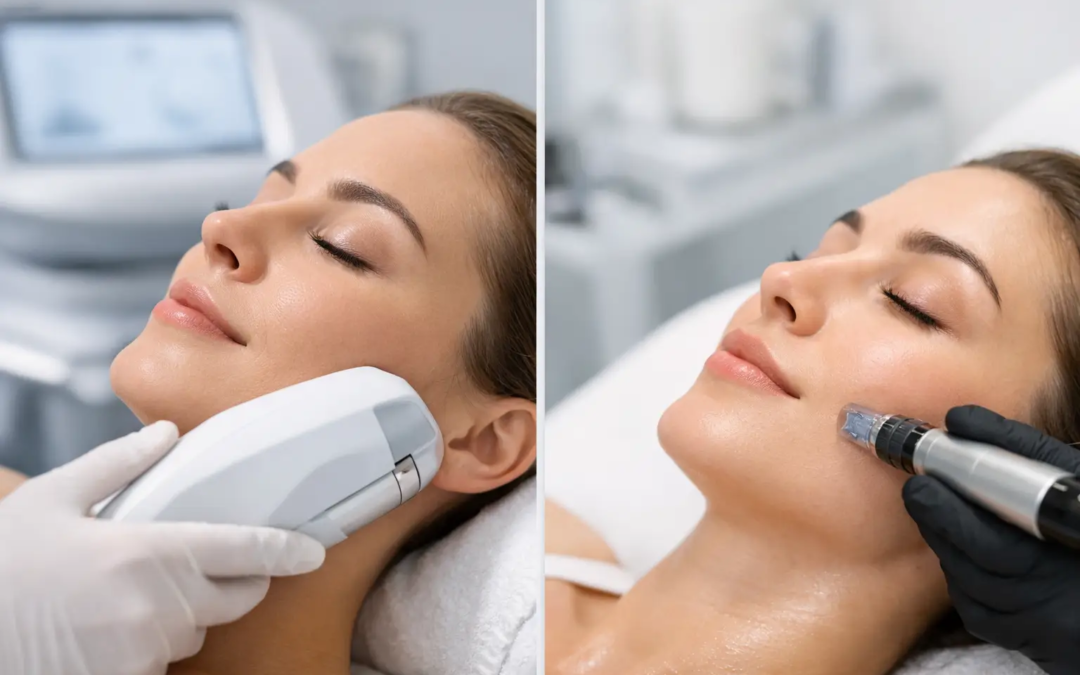
A sharper jawline can make you feel more rested and refined. Smoother cheeks can change the way makeup sits on your skin. Those are different concerns, which is why the Ultraformer vs microneedling treatment decision should start with your goal, not with what is currently trending.
Both treatments support healthier-looking, more youthful skin without surgery, but they work at different levels and create different kinds of improvement. Ultraformer III is designed for lifting and tightening. SkinPen® microneedling is designed to renew texture, tone, and surface quality. For many patients, the best choice is clear once we look at what your skin is asking for.
Ultraformer vs microneedling treatment: the key difference
Ultraformer III uses focused ultrasound energy to deliver controlled heat below the skin’s surface. This energy targets deeper layers associated with structural support, encouraging the body to produce new collagen over time. The result is a gradual tightening effect that can improve the appearance of mild skin laxity, particularly through the lower face, jawline, neck, cheeks, brow area, and décolletage.
Microneedling uses ultra-fine needles to create precise microchannels in the skin. These controlled micro-injuries activate the skin’s natural repair process and stimulate collagen and elastin production. Because the treatment works closer to the surface than Ultraformer, it is especially valuable for uneven texture, enlarged-looking pores, fine lines, acne scarring, and dullness.
Think of the difference this way: Ultraformer helps when your skin needs more support and definition. Microneedling helps when your skin needs smoother, clearer-looking renewal. Neither treatment is inherently better. The right treatment depends on the concern you want to improve first.
When Ultraformer III may be the better choice
Ultraformer is often a strong fit for adults noticing early to moderate laxity but who are not ready for surgical procedures. You may see your lower face beginning to look less defined, your cheeks appearing slightly less lifted, or the skin along the neck feeling less firm than it once did.
The treatment is also appealing for patients who want a discreet approach. There is typically little to no social downtime. You may experience temporary redness, tenderness, or mild swelling, but most people return to normal routines quickly. During treatment, sensations can range from warmth to brief pulses of energy. Comfort varies by treatment area and individual sensitivity, so your provider can discuss options to keep the experience as comfortable as possible.
Results develop gradually because collagen remodeling takes time. Some patients notice an early improvement, while the more meaningful lifting and tightening effect generally evolves over the following two to three months. This is not a treatment for dramatic overnight change. It is for a refreshed, naturally firmer appearance that does not announce itself.
Ultraformer is not designed to erase deep acne scars or correct significant surface texture concerns on its own. If those are your priorities, microneedling or a combination plan may offer more targeted value.
Areas Ultraformer can address
Ultraformer can be customized for the face, under-chin area, neck, and body, depending on your goals. On the face, patients often seek a more defined jawline, a subtle brow lift, or support through the midface. On the body, it may be considered for areas with mild crepiness or laxity.
A thoughtful consultation matters here. Skin thickness, the degree of laxity, facial anatomy, and your desired outcome all influence the treatment plan. Ethical aesthetic care means being honest about when non-surgical tightening can create a beautiful improvement and when a different approach would better meet your expectations.
When SkinPen microneedling may be the better choice
Microneedling is often the first conversation when the mirror shows texture rather than laxity. It can help improve the look of acne scars, fine lines, roughness, enlarged pores, and uneven skin tone. Patients also love it as a skin-maintenance treatment when their complexion feels tired or lacks its usual glow.
After a SkinPen microneedling session, the skin commonly looks pink to red, similar to a mild sunburn. That response usually settles within one to several days, although recovery can vary with treatment depth and skin sensitivity. Your provider will give clear aftercare instructions, including how to protect the skin barrier and when to resume active skincare products, makeup, exercise, and sun exposure.
Microneedling outcomes build over a series. While many people notice a fresh glow after one appointment, collagen renewal is cumulative. A series of treatments spaced several weeks apart is commonly recommended for meaningful concerns such as acne scarring or more visible texture. The exact number should be personalized rather than promised before your skin has been evaluated.
Microneedling can also be paired with platelet-rich plasma, often called a PRP Vampire Facial, for patients who are appropriate candidates and want an elevated regenerative approach. This combination may be considered when the goal is enhanced radiance and support for the skin’s natural healing response.
What microneedling cannot replace
Microneedling can make the skin look smoother and more refined, but it does not create the same deeper lifting effect as focused ultrasound. If jowling, a softening jawline, or loose neck skin is your main concern, you may be disappointed if you choose microneedling alone expecting a tightening result.
That does not make microneedling less valuable. It simply makes it the wrong tool for a different job.
Can you combine Ultraformer and microneedling?
Yes. For the right patient, these treatments can complement one another beautifully. Ultraformer addresses deeper support and contour, while microneedling focuses on the skin’s visible texture and overall quality. Together, they can support a result that looks both firmer and smoother.
Combination care should be planned, not stacked casually. The timing between appointments depends on your skin condition, sensitivity, other treatments, medical history, and recovery needs. If you have active acne, an active skin infection, a tendency toward certain scarring patterns, recent injectable treatments, or are pregnant or breastfeeding, tell your provider during consultation. A personalized plan protects both your results and your skin health.
For some patients, the most effective plan also includes medical-grade home care, sunscreen, chemical peels, BBL™ treatments, or periodic HydraFacial® appointments. The goal is not to do everything. It is to select the few treatments that work together for your specific skin.
How to choose with confidence
Start with the concern that bothers you most. Choose Ultraformer when your priority is mild laxity, facial definition, or a firmer-looking neck and jawline. Choose microneedling when your priority is acne scars, pores, rough texture, fine lines, or a brighter, more even complexion.
Next, consider your timeline. Ultraformer tends to deliver gradual improvement with minimal visible downtime. Microneedling often requires a short recovery period of redness but can be an excellent choice when you are committed to a series and long-term texture refinement.
Finally, be realistic about the level of correction you want. Non-surgical treatments can produce meaningful, confidence-building changes, but they do not duplicate the result of a facelift or erase every scar. A skilled provider should welcome that conversation and guide you toward the option that is likely to deliver visible, believable improvement.
At Medical Advanced Skin Care, treatment recommendations are built around your features, your comfort, and the results that matter to you. The most rewarding choice is not the newest procedure or the most aggressive plan. It is the one that helps your skin look healthy, refreshed, and unmistakably like you.