Fine lines rarely show up all at once. More often, it starts with a change in texture, a little less bounce, makeup settling differently, or skin that looks tired even when you are not. That is where an anti aging facial treatment guide becomes useful – not as a trend report, but as a practical way to understand which treatments actually match your skin, your goals, and your comfort level.
The best anti-aging care is rarely about choosing the most aggressive option. It is about choosing the right option at the right time. For some people, that means focusing on hydration and exfoliation to restore brightness. For others, it means collagen stimulation, pigment correction, or skin tightening. A well-designed treatment plan should feel personalized, medically informed, and realistic about what each service can and cannot do.
What an anti aging facial treatment guide should help you answer
Most clients are not asking for “younger” skin in a dramatic sense. They want skin that looks smoother, firmer, brighter, and more rested. They want to soften visible aging without looking overdone. A good guide should help answer a few core questions: what is causing the change you see, which treatment category addresses it best, and how much maintenance it takes to keep results looking fresh.
Aging skin is not one condition. Fine lines, deeper wrinkles, pigmentation, rough texture, enlarged pores, dullness, and mild skin laxity all respond differently. That is why one facial can be perfect for a friend and underwhelming for you. Skin tone, sun exposure, genetics, lifestyle, and previous treatments all matter.
Start with the concern, not the trend
When clients come in asking for the newest treatment, the better question is often, what are you hoping to improve? If your biggest concern is dullness and dehydration, a collagen-stimulating procedure may not be your first step. If loose skin along the jawline bothers you most, a standard spa facial will likely feel relaxing but fall short on meaningful change.
That is the difference between luxury skincare and luxury care with clinical intent. The facial should match the result you want.
If your skin looks tired, dry, or flat
Hydration-focused facials and gentle resurfacing treatments can make a visible difference quickly. Services like HydraFacial®, oxygen facials, dermaplaning, and microdermabrasion are often ideal when the goal is smoother texture, better product absorption, and a healthier glow.
These treatments are especially helpful before events or during seasonal transitions when skin feels dull or congested. They tend to involve little to no downtime, which makes them a strong starting point for clients who want refreshed skin without interruption to their routine. The trade-off is that they are best for maintenance and surface-level improvement, not significant tightening or deep wrinkle correction.
If your concern is fine lines and texture
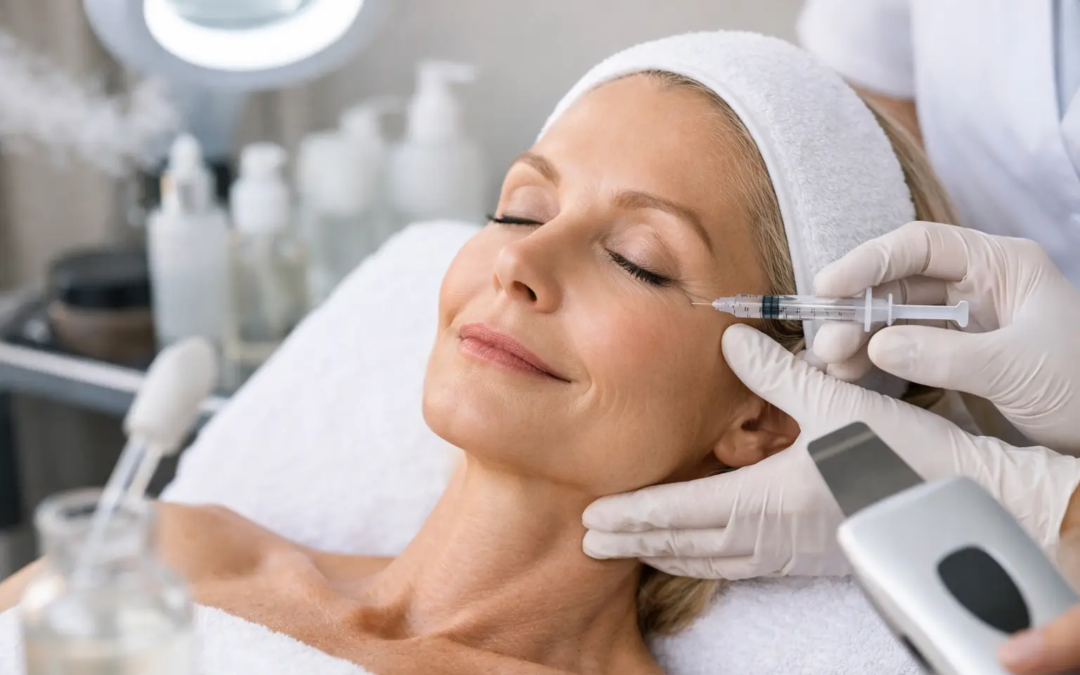
This is where collagen stimulation becomes more important. Microneedling, including SkinPen® microneedling, encourages the skin’s natural repair response and can improve the look of early lines, acne scarring, and uneven texture over time. PRP treatments are sometimes paired with microneedling to enhance the restorative effect, especially for clients looking for a more comprehensive rejuvenation approach.
These treatments usually require a series and some patience. Results build gradually as collagen remodeling develops, so they are not instant-gratification services. For many clients, that slower progression is worth it because the improvement can look very natural.
If sun damage and discoloration are aging your appearance
In South Florida, this is a major category. Pigment from sun exposure often makes skin appear older even before lines become prominent. BroadBand Light, targeted peels, and other corrective resurfacing treatments can help reduce visible discoloration, redness, and uneven tone.
This kind of treatment needs careful planning because not every option is appropriate for every skin tone or season. Sun habits also matter. If you are not willing to protect your skin after treatment, pigment can return and compromise the investment.
If skin laxity is the issue
When the concern is firmness rather than texture, lifting and tightening technologies may make more sense than a traditional facial. Ultrasound-based treatments such as Ultraformer III are designed to support a tighter, more refined appearance by stimulating deeper structural support.
This approach can be appealing for clients who want non-surgical rejuvenation and are not ready for anything invasive. It is important to be honest here – non-surgical tightening can create meaningful improvement, but it does not replicate surgical results. The right candidate usually has mild to moderate laxity and realistic expectations.
How to choose the right anti-aging facial treatment
An effective anti aging facial treatment guide should not push everyone into the same protocol. The right choice depends on your skin condition, your timeline, your tolerance for downtime, and how aggressive you want to be.
If you want immediate glow with no recovery, consider treatments that focus on cleansing, exfoliation, infusion, and hydration. If you are building a long-term correction plan, procedures that stimulate collagen or target pigment may give you more value over time. If you are preparing for a special event, timing matters just as much as treatment selection. Some services are best done a few days before, while others need weeks for the skin to fully settle and show the best result.
Budget also plays a role, and that should be discussed openly. A less expensive treatment done consistently can sometimes outperform a more advanced service done once and then abandoned. Good aesthetic care is not about selling the highest-ticket option. It is about finding the plan you can maintain.
Why combination treatment plans often work best
A single treatment can improve the skin, but many signs of aging respond better to a layered approach. For example, one client may benefit from regular HydraFacial® appointments for hydration and pore refinement, a peel series for discoloration, and periodic microneedling to support collagen. Another may pair skin tightening with maintenance facials to keep the skin looking polished between deeper corrective sessions.
This is often where personalized care matters most. Aging is multi-factorial, so treatment plans usually work best when they address more than one issue at a time without overwhelming the skin. Clinical expertise matters here. Too much intensity, too close together, can create irritation instead of improvement.
What to expect from a professional consultation
The consultation should feel educational, not pressured. Your provider should look at skin quality, tone, texture, sensitivity, breakouts, pigmentation patterns, and overall treatment history. They should also ask about medications, recent sun exposure, upcoming events, and whether you have had reactions to previous procedures.
From there, a thoughtful recommendation should explain why a treatment is appropriate, what result is realistic, how many sessions may be needed, and what aftercare supports the outcome. If everything is promised at once with no discussion of limitations, that is a reason to pause.
At Medical Advanced Skin Care, this personalized, results-driven approach is part of what makes advanced skincare feel both elevated and trustworthy.
The role of maintenance in visible anti-aging results
One of the biggest misconceptions in aesthetics is that one appointment should fix everything. Skin does not work that way. Even excellent treatments are influenced by daily habits, sun exposure, hormones, stress, sleep, and skincare consistency.
Maintenance is not a sales tactic. It is how results stay visible. That may mean monthly facials, seasonal peels, a yearly tightening treatment, or a collagen-stimulating series repeated as needed. The plan depends on your age, skin behavior, and goals.
Home care matters too, but it should support professional treatment, not replace it. Medical-grade skincare can extend and protect your results, especially when it includes sunscreen, antioxidants, hydration support, and ingredients that encourage cell turnover. The most beautiful outcomes usually come from the combination of in-clinic treatments and a disciplined home routine.
When less is actually better
There is a point where more treatment is not better treatment. Over-exfoliating, chasing every trend, or stacking too many active procedures too quickly can leave skin reactive, inflamed, and less resilient. That is particularly true for sensitive skin or clients already using strong prescription products.
A polished anti-aging plan should improve the skin without compromising its barrier. Sometimes the smartest move is to rebuild skin health first, then add more corrective services gradually. Healthy skin tends to respond better, recover faster, and hold results more beautifully.
The right facial treatment should leave you looking like yourself – just fresher, smoother, and more confident. Not every service is right for every face, and that is a good thing. Real results come from matching the treatment to the person, with a plan that respects both skin biology and personal goals. When that happens, anti-aging care stops feeling confusing and starts feeling clear, supportive, and genuinely worth it.