That soft facial hair can seem harmless until makeup starts catching on it, sunscreen pills around the jawline, or your skin looks dull no matter how good your skincare is. Dermaplaning for peach fuzz is one of the simplest ways to create a smoother, brighter finish, but the real value is not just hair removal. It is the combination of gentle exfoliation, better product absorption, and an instantly more refined skin surface.
For many clients, the appeal is immediate. Skin feels silkier, foundation sits more evenly, and the complexion looks fresher right away. But like most aesthetic treatments, the best results depend on your skin type, your goals, and how the treatment is performed.
What dermaplaning for peach fuzz actually does
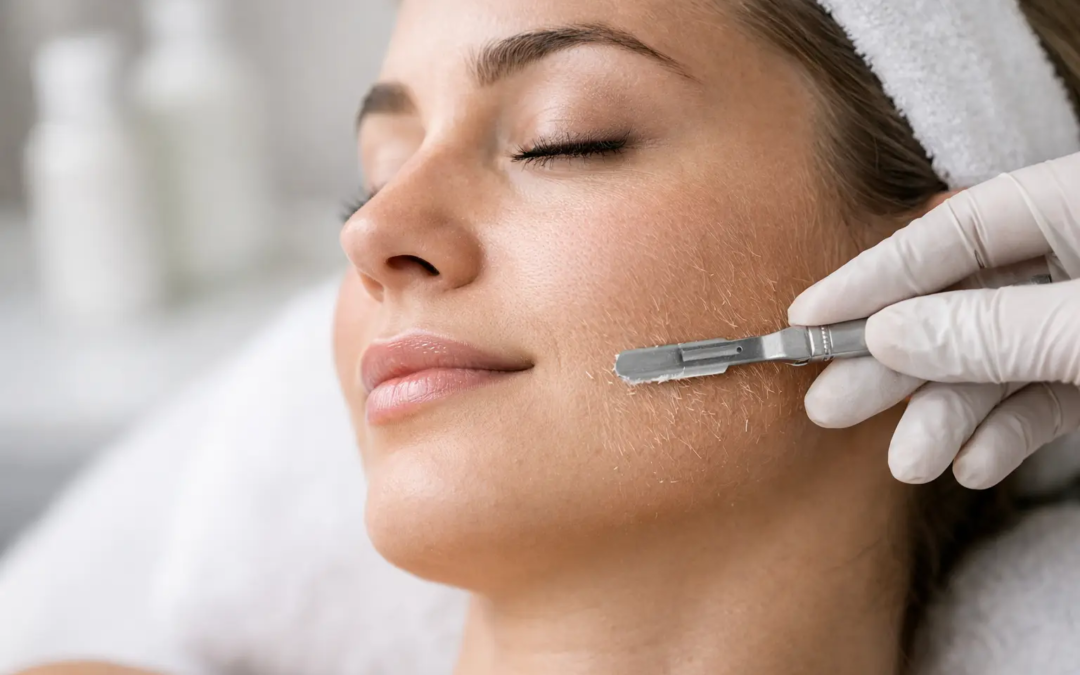
Dermaplaning is a controlled exfoliation treatment performed with a sterile surgical blade. During the service, the blade is held at a precise angle and moved across the skin to remove dead surface cells along with fine vellus hair, often called peach fuzz.
That dual action is what makes the treatment so popular. Removing peach fuzz can improve the look and feel of the skin on its own, but taking away built-up dead skin cells is what often creates that brighter, smoother appearance clients notice after treatment. Skin care products also tend to apply more evenly afterward, and many people find that their home routine works a little better because there is less surface buildup in the way.
This is not the same as shaving in the everyday sense, even though a blade is involved. Professional dermaplaning is a treatment-based technique designed to exfoliate with intention, precision, and skin safety in mind.
Will dermaplaning make peach fuzz grow back thicker?
This is the question almost everyone asks, and the answer is no. Dermaplaning does not change the structure of the hair follicle. It does not make vellus hair grow back darker, thicker, or faster.
What can happen is that regrowth feels slightly different at first because the hair has been cut straight across at the surface. As it grows back in, it may feel more noticeable to you for a short time. That is a texture issue, not a change in the hair itself.
If someone is dealing with coarse facial hair, sudden changes in hair growth, or hormonally driven hair on the chin or upper lip, that is a different conversation. Dermaplaning is best suited for fine facial hair, not dense terminal hair growth. In those cases, another treatment such as laser hair removal may be the more effective long-term option.
Who is a good candidate?
Dermaplaning for peach fuzz is often a strong fit for clients who want smoother texture, better makeup application, and a brighter overall look without downtime. It can be especially appealing before events, photo sessions, vacations, or any time you want skin to look polished and refreshed.
It is generally well suited for normal, dry, or mildly sensitive skin when performed correctly. Clients who feel like their complexion looks flat, rough, or tired often appreciate how quickly dermaplaning creates a cleaner skin surface.
That said, it is not ideal for everyone at every moment. If you have active acne, inflamed breakouts, open skin, sunburn, or certain rosacea flares, the blade can aggravate the skin rather than improve it. The same is true if you are overusing exfoliants at home or using prescription products that leave the skin unusually fragile. Good treatment planning matters here. Sometimes the right answer is yes, but not today.
What to expect during a professional treatment
A professional dermaplaning appointment is usually straightforward and comfortable. The skin is first cleansed thoroughly to remove oil, makeup, and debris. Your provider then evaluates the skin and performs the treatment in controlled strokes, working methodically across the face while avoiding compromised areas.
Most clients describe the sensation as light brushing or a gentle scraping feeling, not pain. There is no heat and typically no downtime, though some people have mild pinkness for a few hours afterward.
The immediate result is often what makes people come back. Skin feels exceptionally smooth, looks more radiant, and has that clean, refined finish that can be hard to achieve with home exfoliation alone. In a clinical setting, dermaplaning may also be paired thoughtfully with other treatments or post-treatment products to enhance glow and support skin health.
Professional treatment vs at-home tools
At-home facial razors are everywhere, and they can make dermaplaning seem simple enough to do yourself. The issue is not that every home tool is automatically harmful. The issue is that results, hygiene, and skin safety are not the same.
Professional dermaplaning uses a sterile blade, proper skin prep, a trained technique, and expert judgment about where treatment should and should not be performed. That matters more than people realize. When at-home tools are used with too much pressure, poor sanitation, or on skin that should not be exfoliated, the result can be irritation, small cuts, inflammation, or worsened sensitivity.
There is also the precision factor. A trained provider can tailor the treatment to your skin condition, your current routine, and your goals. If you are prone to breakouts, pigment concerns, or reactivity, that customization can make a meaningful difference.
For clients who care about visible results and skin integrity, professional treatment is usually the better investment.
Benefits beyond hair removal
The conversation often starts with peach fuzz, but the treatment benefits go further. Dermaplaning helps remove that veil of dull surface buildup that can make skin look uneven or tired. This can leave the complexion looking more luminous and feeling softer almost immediately.
Many clients also notice that makeup glides on more smoothly. Foundation is less likely to cling to fine hair or dry patches, and the skin surface tends to look more even in natural light and on camera. That is one reason dermaplaning is a favorite before weddings, social events, and professional photos.
There is also a maintenance benefit. When dead cells accumulate on the skin, they can contribute to rough texture and reduce the effectiveness of topical products. By clearing that surface layer, dermaplaning can support a more polished, receptive skin canvas.
How often should you do it?
For most people, every 3 to 4 weeks is a reasonable schedule. That timing aligns with the natural skin renewal cycle and allows peach fuzz to regrow enough for another effective treatment.
Still, frequency should reflect your skin, not a generic calendar. If your skin is reactive, if you use active ingredients regularly, or if you are combining dermaplaning with other in-office services, spacing may need to be adjusted. A personalized treatment plan will always be more effective than overdoing exfoliation in pursuit of faster results.
Aftercare matters more than people think
Freshly dermaplaned skin often looks great immediately, which can make it easy to forget that it is also more exposed. After treatment, the skin can be temporarily more vulnerable to irritation and UV damage.
That is why gentle post-care matters. Hydration, barrier-supportive products, and daily sunscreen are essential. It is also wise to avoid harsh scrubs, strong acids, retinoids, and excessive heat for a short period if your provider recommends it. The goal is to protect that smooth, fresh surface, not stress it.
Is dermaplaning for peach fuzz worth it?
If your main concern is fine facial hair, dullness, or a rough skin surface, dermaplaning can absolutely be worth it. The results are visible right away, the treatment is non-invasive, and it fits well into a modern skincare plan focused on looking refreshed rather than overdone.
The key is having the right expectations. Dermaplaning is not a cure-all, and it is not the best answer for every type of facial hair or every skin condition. But in the right hands, for the right candidate, it is an elegant treatment that delivers exactly what many people want – smoother texture, cleaner makeup application, and a brighter, more confident look.
At Medical Advanced Skin Care, treatments are approached with that bigger picture in mind: not just what sounds appealing, but what will truly support healthier-looking skin over time. If peach fuzz has been bothering you or your complexion has been feeling less polished than you would like, dermaplaning may be the kind of simple, expertly delivered step that makes your whole routine work better. Sometimes the most noticeable glow comes from removing what is quietly getting in the way.