
Sun spots tend to announce themselves before you do. A little redness around the nose, scattered brown pigment across the cheeks, or that uneven tone that makeup never fully softens can make skin look tired even when you feel well-rested. This guide to BBL photofacial treatment is designed to give you a clear, medically grounded view of what the treatment does, who it helps most, and what to expect before you book.
BBL stands for BroadBand Light, an advanced light-based treatment used to improve visible signs of sun damage, redness, acne, and uneven pigmentation. It is not a facial in the spa sense of the word. It is a clinical skin rejuvenation treatment that uses pulses of light to target unwanted pigment and vascular irregularities while supporting overall skin clarity.
For many patients, BBL is appealing because it can create a brighter, more even complexion without the downtime associated with more aggressive resurfacing. That said, results depend on your skin concerns, your skin tone, your sun habits, and whether the treatment plan is personalized rather than rushed.
What BBL photofacial treatment actually treats
A BBL photofacial is best known for correcting the kind of skin changes that build up gradually. Sun exposure is a major one, especially in South Florida where incidental UV exposure adds up quickly. Brown spots, freckles, diffuse redness, broken capillaries, and a generally mottled appearance often respond well.
It can also be helpful for certain acne-related concerns. Active acne may improve in some cases because light energy can reduce inflammation and target acne-causing bacteria. Post-inflammatory redness may also fade over time. Some patients pursue BBL because their skin does not necessarily look older, but it looks less clear and less even than it used to.
This is where expectations matter. BBL can produce meaningful improvement in tone and visible discoloration, but it is not the right answer for every issue. Deep wrinkles, significant skin laxity, or textural scarring may need a different or combined approach.
A guide to BBL photofacial treatment and how it works
BBL delivers pulses of broad-spectrum light into the skin. That light is absorbed by specific targets called chromophores, mainly melanin in pigmented spots and hemoglobin in visible blood vessels or redness. Once the light is absorbed, heat breaks down the unwanted pigment or vascular lesion so the body can clear it naturally.
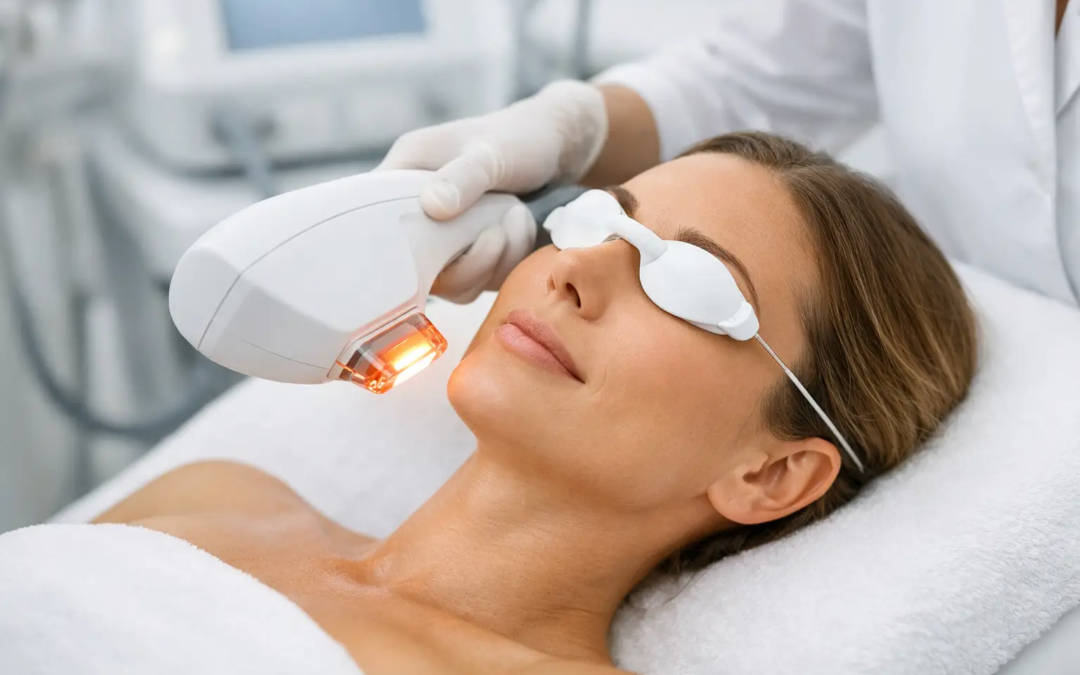
That process sounds technical, but the patient experience is usually straightforward. During treatment, the skin is cleansed and prepared, protective eyewear is used, and a handheld device delivers a series of light pulses. Many people describe the sensation as a quick snap, similar to a rubber band, paired with warmth.
The treatment itself is usually fast. A smaller area may take only a few minutes, while a full face or face and neck session takes longer. Comfort is generally very manageable, especially when settings are chosen appropriately for your skin and concerns.
What skin concerns respond best
The strongest BBL candidates are often dealing with excess pigment and redness rather than deep structural aging. If your main concerns are sun spots, age spots, rosacea-related flushing, facial vessels, or overall dullness from cumulative sun exposure, BBL is often a very strong option.
Patients with lighter to medium skin tones have historically been the most typical candidates, although modern protocols can expand options depending on the device, provider expertise, and careful treatment planning. Skin typing and consultation are essential because light-based treatments are not one-size-fits-all.
If melasma is your main concern, the answer is more nuanced. Some pigment conditions can improve with light-based treatment, while others can worsen if heat triggers inflammation. That is why an honest assessment matters more than a quick sales pitch. The best treatment is not always the most popular one.
What to expect before, during, and after treatment
Preparation usually starts with limiting sun exposure and avoiding self-tanner before your appointment. Recently tanned skin increases the risk of unwanted side effects because the treatment may not be able to distinguish as clearly between the pigment you want treated and pigment in the surrounding skin.
During the appointment, your provider will tailor the settings to your skin tone, concerns, and treatment area. This customization is one of the biggest factors in both safety and outcome. In a clinical setting, BBL should feel deliberate, not generic.
After treatment, it is common to have mild redness or warmth for several hours. Pigmented spots often look darker before they flake off or fade over the following days. If redness or small vessels were targeted, they may temporarily appear more noticeable before improving.
Downtime is usually minimal, but minimal does not mean no aftercare. Sun protection is essential. Gentle skincare is important. Picking at darkened pigment is never a good idea. Most patients return to normal activity quickly, but your skin still needs to be treated like freshly treated skin, not business as usual.
How many sessions do you need?
One of the most common questions in any guide to BBL photofacial treatment is how many sessions it takes to see results. The honest answer is that it depends on what you are treating and how much correction you want.
Some patients notice improvement after one session, especially with superficial pigment. More often, a series of treatments is recommended for the best result. Redness, diffuse sun damage, and acne-related concerns often respond better with a planned sequence rather than a single appointment.
Maintenance matters too. Skin keeps aging, and sun exposure keeps happening. A beautiful response to BBL can be maintained, but it is not frozen in time. Thoughtful maintenance treatments, paired with medical-grade skincare and daily SPF, usually give the most lasting payoff.
Benefits and trade-offs to know before you commit
The biggest benefit of BBL is that it can make skin look clearer, fresher, and more even without requiring a dramatic recovery period. Patients often like that it targets visible discoloration while supporting an overall rejuvenated look.
Another advantage is versatility. BBL can be used on the face, neck, chest, and other areas where sun damage shows up. For patients who want real improvement but are not interested in aggressive peels or ablative lasers, it often sits in a very appealing middle ground.
The trade-off is that BBL is not the right fit for every complexion or every skin goal. It requires careful screening, especially in patients with deeper skin tones, melasma tendencies, recent sun exposure, or certain medications. It also works best when patients are willing to protect their results. If your lifestyle includes frequent tanning or inconsistent SPF use, results may be limited and the risk profile changes.
Choosing the right provider for BBL
Technology matters, but technique matters just as much. A qualified provider should assess your skin in person, ask about your history, explain what BBL can and cannot do, and build a plan around your actual concerns. If your provider talks only about the device and not about your skin, that is a gap worth noticing.
A strong consultation should also cover alternatives. In some cases, BBL may be combined with other services for a more complete result. In a clinic such as Medical Advanced Skin Care, that kind of personalized planning is part of the value. The goal is not simply to perform a treatment. It is to choose the right treatment at the right time for healthier, more confident skin.
Is BBL photofacial treatment worth it?
For the right patient, BBL can be one of the most satisfying non-surgical treatments because the improvement looks clean, polished, and believable. Skin still looks like your skin – just clearer and more refined. That subtle but visible shift is often exactly what patients want.
Worth is always personal. If you are expecting one treatment to erase every sign of aging, you may be disappointed. If you want a clinically proven way to address redness, pigment, and uneven tone with limited downtime, BBL can be an excellent investment.
The best next step is not guessing from photos online. It is getting a professional evaluation of your skin, your goals, and your timeline so your treatment plan reflects you, not a generic protocol. When BBL is chosen thoughtfully and performed well, it can do more than brighten the skin – it can restore the confidence that comes with seeing a clearer, healthier complexion in the mirror.