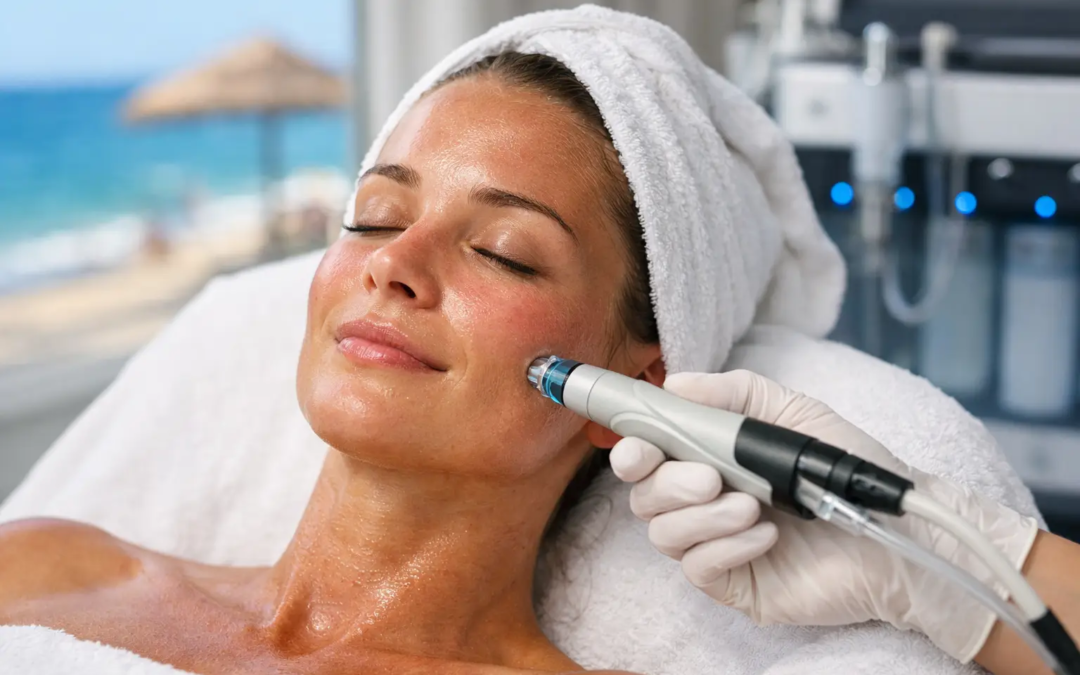
A beach day can leave you glowing or leave your skin quietly irritated, dehydrated, and more reactive than it looks. That is why hydrafacial after sun exposure is not a simple yes-or-no question. The right answer depends on how much sun your skin absorbed, whether there is visible redness or heat, and how quickly your barrier can recover.
For many patients in South Florida, this comes up often. You want the fresh, smooth finish of a HydraFacial®, but your skin has also seen plenty of sun, humidity, and heat. In a clinical setting, the goal is not to force a treatment onto stressed skin. It is to time the treatment properly so you protect your results and your skin health.
HydraFacial after sun exposure: when it can be a good idea
A HydraFacial can be an excellent skin-refreshing treatment when your skin is no longer actively inflamed from the sun. The treatment is designed to cleanse, exfoliate, extract, and infuse the skin with hydrating serums. For skin that feels dull, congested, or dehydrated after time outdoors, that can be very appealing.
The key phrase is after recovery has started, not during active irritation. If your skin simply feels a little dry or looks tired, a gentle, professionally adjusted HydraFacial may help restore comfort and radiance. If your skin is pink, hot, tender, peeling, or sunburned, treatment should wait.
This distinction matters because sun exposure can weaken the skin barrier. A HydraFacial is gentle compared with many resurfacing options, but it still includes exfoliation and active serums. When the barrier is already compromised, even a well-loved treatment can feel too stimulating.
Why freshly sun-exposed skin needs caution
Sun exposure does more than create a tan or temporary redness. It increases inflammation, pulls moisture from the skin, and can make the surface more sensitive than usual. Sometimes the damage is obvious. Sometimes it is subtle, and you only notice it when skincare starts to sting or your face feels tight later in the day.
When skin is inflamed, exfoliation can push it further. Suction-based extractions and targeted boosters may also feel less comfortable than they normally would. Instead of leaving with the clean, hydrated glow you expected, you could end up with prolonged redness, irritation, or uneven healing.
That is why ethical treatment planning matters. In a medical aesthetics environment, the best recommendation is not always the fastest appointment. It is the treatment that matches your skin’s condition that day.
Signs you should wait before booking
If you have any sign of sunburn, it is better to postpone. That includes redness, warmth, soreness, swelling, peeling, or skin that feels more tender than normal when you wash it or apply moisturizer.
Even without a classic burn, you may need to pause if your skin feels unusually dry, itchy, or reactive. A recent day on the boat, a long tennis match, or a weekend outside can create low-grade inflammation that is easy to underestimate.
As a general rule, if your skin is asking for recovery, give it recovery first.
How long should you wait?
There is no perfect number for everyone, but mild sun exposure with no visible burn may only require a short waiting period. If your skin looks normal, feels calm, and is no longer heat-sensitive, you may be ready soon.
If you had definite sunburn, peeling, or significant redness, waiting at least one to two weeks is often more appropriate. In some cases, especially if pigmentation is a concern or the barrier remains impaired, it may take longer.
This is where a professional skin assessment helps. Timing should be based on what your skin is doing now, not just what happened on the calendar. A patient who had sun exposure five days ago may be ready, while someone else may still need more recovery after ten days.
What to do instead if your skin is too sun-stressed
If a HydraFacial is not the right move yet, that does not mean you are stuck. It simply means the priority shifts from exfoliation to restoration.
For the next several days, keep your routine simple and barrier-focused. Use a gentle cleanser, a bland moisturizer, and broad-spectrum SPF every day. Avoid retinoids, acids, scrubs, and aggressive actives until your skin feels fully calm again. Cool compresses and hydration can also help your skin settle.
If you are unsure whether your skin is ready for treatment, do not guess. A reputable provider can tell the difference between skin that is merely thirsty and skin that is still inflamed.
Can a HydraFacial be customized after recent sun exposure?
Yes, but only within reason. One of the advantages of HydraFacial is that it can be adjusted based on skin condition. A provider may choose gentler settings, skip more stimulating add-ons, or focus heavily on hydration and soothing support.
That said, customization is not a workaround for treating sunburned skin. If the skin barrier is visibly compromised, the best customization may be postponing the treatment entirely.
This is an area where patients benefit from honest guidance. In a clinic that values long-term skin health, preserving your skin comes before squeezing you into a treatment schedule.
What results can you expect once your skin is ready?
When timed correctly, HydraFacial can be especially rewarding after a period of sun and heat exposure. Skin often looks smoother, more hydrated, and more refreshed. Many patients notice that makeup sits better, the surface feels cleaner, and their complexion looks less tired.
It can also support maintenance if your broader goal is healthy, polished skin year-round. For South Florida patients, that matters. Frequent sun, humidity, sweat, sunscreen buildup, and environmental exposure can leave skin looking heavy or uneven even when you are diligent with home care.
Still, it helps to keep expectations realistic. A HydraFacial can improve dehydration, congestion, and surface dullness, but it is not a treatment for sun damage itself in the deeper sense. Concerns like persistent pigmentation, broken capillaries, or cumulative photoaging may call for a different treatment plan once your skin is stable.
Protecting your results after the appointment
After your treatment, your skin will be freshly exfoliated and should be treated with care. This does not mean you need a dramatic recovery period, but it does mean you should be smart about sun exposure.
Stay diligent with sunscreen, ideally a broad-spectrum SPF 30 or higher, and reapply when you are outdoors. A hat, sunglasses, and shade are not extra credit in Florida. They are part of protecting your investment.
For the next couple of days, it is also wise to avoid direct, prolonged sun exposure if possible. Skip the urge to schedule a facial right before a beach weekend and expect perfect timing. If your social plans include heavy sun, it is often better to place your treatment after your skin has recovered, not right before another round of UV stress.
When another treatment may be better than HydraFacial
Sometimes the bigger issue is not whether you can have a HydraFacial after sun exposure. It is whether HydraFacial is the best fit for your current skin goals.
If you are dealing with visible pigment changes, textural sun damage, or signs of long-term photoaging, you may ultimately benefit more from a customized treatment plan that goes beyond cleansing and hydration. That might include seasonal planning around resurfacing, collagen support, or pigment-focused care. Those decisions should be made carefully, especially in a sunny climate where timing and aftercare affect everything.
At Medical Advanced Skin Care, this is where personalized treatment planning makes the difference. The right answer is rarely the same for every face, every season, or every level of sun exposure.
The safest mindset to have
If your skin has been in the sun, think recovery first and glow second. That approach may feel slower, but it is what protects your barrier, your comfort, and your long-term results.
A HydraFacial can be a beautiful reset after sun exposure when your skin is calm and ready for it. When it is not, waiting is not a setback. It is good skin judgment, and that is often what leads to the most confident result.