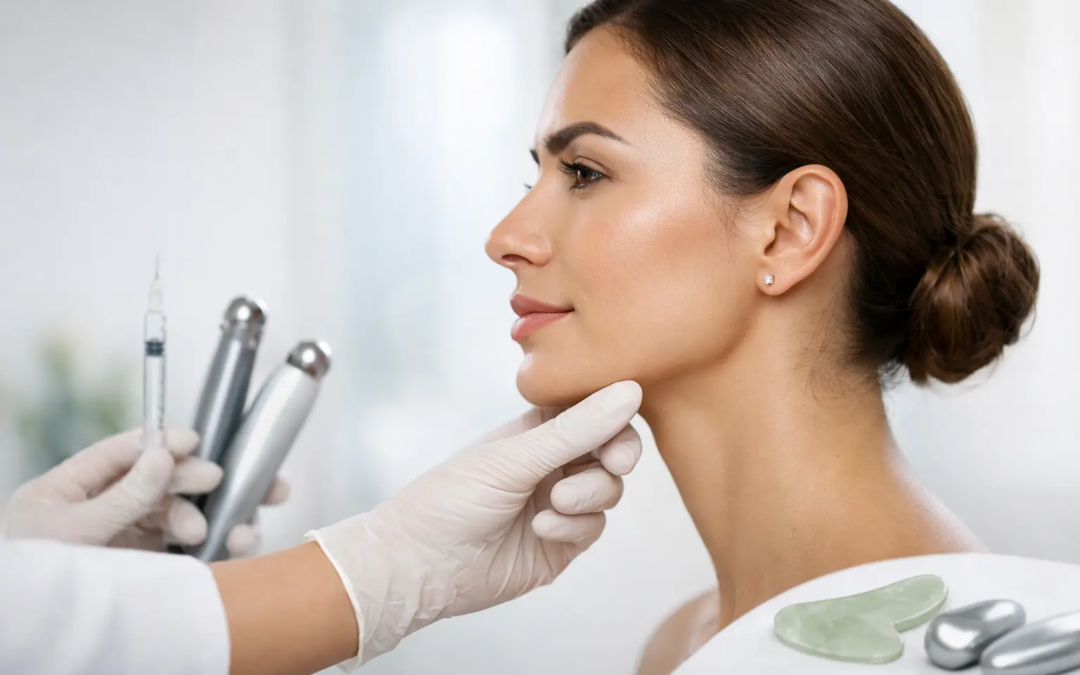
A softer jawline is not always caused by the same thing. For one person, it is fullness beneath the chin. For another, it is skin laxity, volume loss along the jaw, or enlarged masseter muscles creating a wider lower face. The best non surgical jawline options begin with identifying what is actually changing your facial contour, not selecting a treatment based on a trend.
At Medical Advanced Skin Care, we believe refined results come from a personalized plan. The goal is not to create an overly sharp or artificial-looking profile. It is to support a firmer, more balanced lower face while preserving the features that make you look like yourself.
What Creates a Less Defined Jawline?
The jawline is shaped by bone structure, fat distribution, muscle activity, skin quality, and the gradual loss of collagen and facial volume that comes with time. Genetics can influence where fullness collects, while sun exposure, weight fluctuations, and natural aging can affect how firmly the skin sits over the jaw and neck.
That is why two people asking for a more defined jawline may need very different care. Adding structure with filler may be helpful for someone with a recessed chin or lost definition. It may be the wrong first step for someone whose concern is loose skin under the chin. A thoughtful assessment considers the entire lower face, including the chin, cheeks, neck, bite pattern, and skin elasticity.
Non Surgical Jawline Options: What Each Can Address
Non-surgical treatments can improve the appearance of the jawline, but no single service is right for every concern. Results, comfort, downtime, and longevity vary. The most appropriate choice depends on the source of the concern and how much correction you want.
Ultrasound Skin Tightening for Laxity
Focused ultrasound treatments, including Ultraformer III, deliver energy at targeted depths beneath the skin to encourage new collagen formation. This can be an excellent option for mild to moderate skin laxity around the lower face, jawline, and beneath the chin. Rather than adding volume, it works by supporting a firmer, subtly lifted appearance over time.
This approach is especially appealing for clients who want gradual, natural-looking refinement without injectables or surgery. Some people see an early tightening effect, but collagen remodeling continues over the following weeks and months. Results are not instant, and they are generally more modest than a surgical lift, but the treatment can be meaningful when skin laxity is the primary issue and the skin still has good capacity to respond.
Dermal Filler for Structure and Balance
Strategically placed dermal filler can enhance the chin and jawline when the concern is lack of projection, contour, or age-related volume loss. A skilled injector may use filler to create a cleaner transition from chin to jaw, improve facial proportion, or replace support that has diminished over time.
Filler is not simply about making the jaw larger. In a balanced plan, small, precise placement can bring harmony to the profile and make the lower face appear more defined. It can also be combined with skin tightening when both structural support and laxity are present.
The trade-off is that filler is temporary and should be approached conservatively. Too much product, poor placement, or treating a face that really needs skin tightening can create heaviness rather than definition. A medical consultation should include a discussion of product choice, anatomy, potential bruising or swelling, and the appropriate timing for maintenance.
Neuromodulators for a Wider Jaw Caused by Muscle
If the lower face looks square because the masseter muscles are enlarged, neuromodulator injections may help create a slimmer appearance. These injections relax part of the muscle’s activity over time, which can reduce its bulk in suitable candidates. They may also benefit people who clench or grind their teeth, although treatment for jaw pain or dental concerns should be coordinated with the appropriate medical or dental professional.
This option does not tighten loose skin or remove under-chin fullness. In fact, reducing masseter volume is not ideal for everyone. Someone with existing jowling or significant lower-face laxity may lose support and notice more looseness. Facial assessment matters because a treatment that beautifully softens one face can be less flattering on another.
Fat Reduction Beneath the Chin
Submental fullness, often called a double chin, can blur the angle between the jaw and neck even in people at a stable weight. Injectable fat-reduction treatments may gradually reduce small to moderate pockets of fat under the chin. Depending on the treatment, a series of sessions may be needed, and swelling can be more noticeable than many people expect in the days that follow.
For some candidates, non-surgical fat reduction creates a more visible neck-to-jawline transition. However, it does not correct substantial loose skin. If skin elasticity is limited, reducing fat alone can sometimes reveal laxity that was already present. Combining a fat-focused approach with collagen-stimulating skin tightening may offer a more balanced outcome when both concerns exist.
Skin Quality Treatments as Supportive Care
Healthy, resilient skin helps every contouring treatment look more polished. Treatments such as microneedling, chemical peels, and medical-grade skincare can support smoother texture, clearer tone, and collagen-focused skin renewal. They will not reshape the jawline on their own, but they can complement a broader facial rejuvenation plan.
This distinction protects clients from unrealistic promises. A facial, peel, or topical product can improve the quality and luminosity of skin, yet it cannot replace volume, remove a meaningful fat pocket, or lift significant laxity. Honest recommendations focus on what each treatment can realistically achieve.
How to Choose the Right Approach
A clear consultation is the most valuable first step. Your provider should ask what you see in the mirror, what outcome feels natural to you, whether your concern has changed gradually or recently, and what level of downtime you can accept. Photos, facial movement, skin thickness, and profile balance can all influence the plan.
For example, a client in Lighthouse Point who notices early jowling and crepey skin may be well suited to collagen-stimulating ultrasound treatment. Someone with a soft chin profile but firm skin may benefit more from structural enhancement. A person with fullness under the chin and good elasticity may consider a fat-reduction strategy. Often, the best result comes from a measured combination rather than trying to make one treatment solve every concern.
Timing matters as well. Some options produce immediate contour changes, while others depend on gradual collagen production or a series of sessions. Before treatment, ask when results usually appear, how long they may last, whether maintenance is expected, and what recovery is typical. A trustworthy provider will also tell you when a non-surgical option is unlikely to meet your goals.
When Surgery May Be the Better Choice
Non-surgical care can create beautiful refinement, but it has limits. Significant hanging skin, pronounced jowls, or a large amount of under-chin fat may respond more predictably to surgical procedures such as neck liposuction or a facelift. Choosing surgery does not mean you have failed at non-surgical care. It simply reflects the level of correction needed to achieve a particular result.
For clients who prefer to avoid surgery, a conservative treatment plan can still improve skin quality, contour, and confidence. The right expectation is subtle to moderate enhancement, not a surgical transformation without surgery.
A well-defined jawline should still move naturally, suit your features, and look credible from every angle. Start with an in-person evaluation, share the result you hope to see, and allow your treatment plan to be guided by anatomy, skin health, and careful clinical judgment. That is where lasting confidence begins.