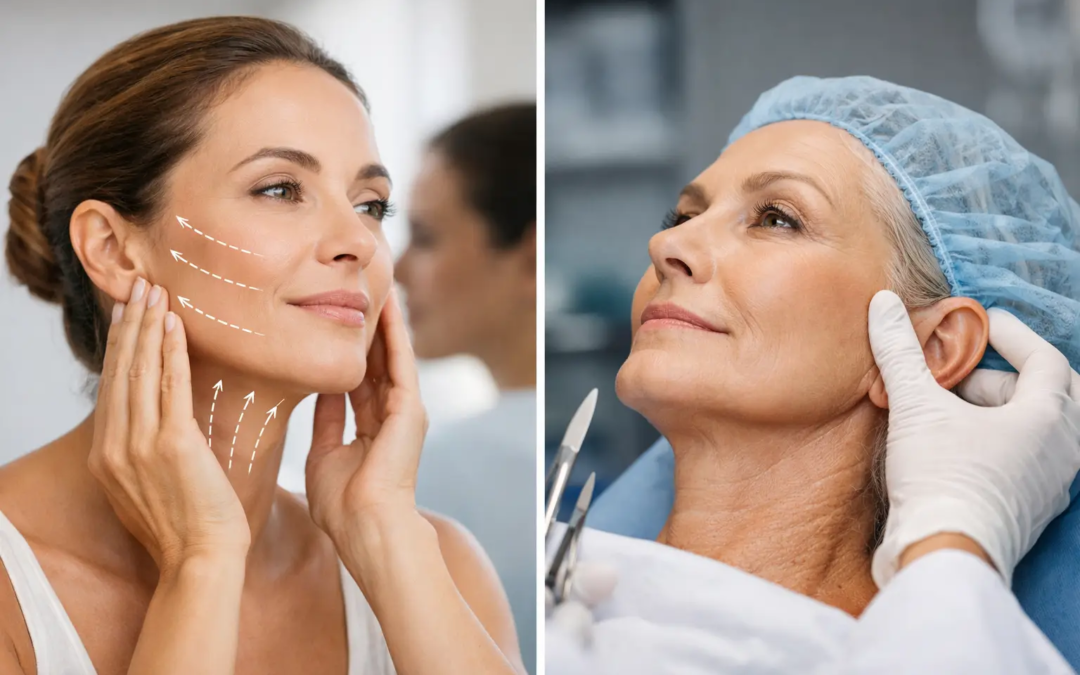
A softer jawline, looser skin beneath the chin, and cheeks that no longer look as lifted in photos can create a very specific question: is a non-surgical treatment enough, or is surgery the better choice? When comparing skin tightening vs facelift, the right answer is not about choosing the most dramatic option. It is about choosing the treatment that matches your skin, your degree of laxity, your timeline, and the result you want to see in the mirror.
For many South Florida clients, the goal is refreshed rather than altered. They want skin that looks firmer, smoother, and more supported without looking overdone or stepping away from life for an extended recovery. Understanding what each option can realistically accomplish is the first step toward a decision you can feel good about.
Skin Tightening vs Facelift: They Solve Different Concerns
Non-surgical skin tightening and facelift surgery can both improve signs of facial aging, but they work in fundamentally different ways. A facelift is a surgical procedure designed to reposition and tighten deeper facial tissues while removing or redraping excess skin. It can create a substantial improvement in the lower face, jawline, and neck when laxity is more advanced.
Non-surgical skin tightening treatments use energy-based technology to stimulate the body’s collagen response in targeted layers of the skin and underlying tissue. Rather than removing skin or surgically lifting the face, these treatments encourage gradual structural support and can improve mild to moderate looseness.
That distinction matters. If your concern is early jowling, mild loss of jawline definition, crepey texture, or a subtle drop in cheek support, non-surgical tightening may be an excellent fit. If you have significant skin redundancy, pronounced jowls, or a neck contour that has changed considerably, a facelift may deliver a level of correction that non-surgical treatments cannot duplicate.
Neither choice is automatically better. They simply offer different levels of correction, recovery, and longevity.
What Non-Surgical Skin Tightening Can Do
Advanced skin tightening is ideal for clients who want visible improvement with little to no social downtime. At Medical Advanced Skin Care, Ultraformer III uses focused ultrasound technology to deliver controlled energy beneath the skin’s surface. This process supports new collagen production and can help create a firmer, more defined appearance over time.
The treatment is commonly considered for the lower face, jawline, neck, brow area, and other areas where skin has begun to lose its snap. Because collagen remodeling takes time, results are gradual. Some clients notice an early tightening effect, while the fuller result typically develops over the following weeks and months as the skin’s collagen structure responds.
Non-surgical tightening is especially appealing when you want to maintain your appearance rather than make a dramatic change. It may help improve the look of mild laxity, soften the appearance of early jowls, refine jawline definition, and support a more rested look. Treatments can also be thoughtfully paired with services that address surface-level concerns, such as microneedling, chemical peels, or BroadBand Light treatments for uneven tone and texture.
The trade-off is that non-surgical treatment has limits. It does not remove excess skin, reposition facial muscles, or produce the same degree of lift as surgery. Results also vary based on age, skin quality, sun exposure, genetics, weight changes, and how much laxity is present at the start.
What a Facelift Can Do
A facelift is generally the more powerful option for moderate to significant facial sagging. A qualified facial plastic surgeon can address deeper tissue descent and excess skin in a way that device-based treatments cannot. For the right candidate, surgery can restore sharper contour through the jawline and improve laxity in the cheeks and neck with a more substantial, longer-lasting result.
It also requires a bigger commitment. A facelift involves anesthesia, incisions, bruising, swelling, and a recovery period that needs to be planned around work, events, exercise, and social life. While modern surgical techniques can produce natural-looking outcomes, choosing a surgeon with appropriate training, experience, and an aesthetic that aligns with your goals is essential.
Cost is another consideration. Surgery carries a higher upfront investment, along with potential surgical facility, anesthesia, and recovery-related expenses. Non-surgical tightening is typically more accessible per treatment, although maintenance sessions may be recommended depending on your goals and collagen response.
How Recovery and Results Compare
The recovery experience is often the deciding factor in skin tightening vs facelift. Most non-surgical tightening clients can return to their normal routine quickly. You may experience temporary tenderness, redness, or mild swelling, but these effects are generally short-lived. Treatment is often a practical choice for someone with a busy schedule who wants to support facial firmness without taking significant time away from work or family.
A facelift requires more patience. Initial healing generally includes visible swelling and bruising, and the final result continues to settle over time. The recovery can be worthwhile for someone seeking a more transformative change, but it is not a casual appointment between errands.
Results differ in scale as well as timing. Non-surgical tightening is gradual and understated, which many clients appreciate. Friends may notice that you look rested, healthier, or less tired without being able to identify exactly why. A facelift can create a more immediate structural change once healing progresses, particularly when loose skin and deeper facial descent are the main concerns.
Longevity depends on the treatment and the individual. A facelift does not stop aging, but it can provide durable correction. Skin tightening supports collagen production, yet the natural aging process continues, so periodic maintenance may help preserve the result. Consistent sunscreen use, medical-grade skincare, stable weight, and a healthy lifestyle all influence how your skin ages after either path.
Who Is a Good Candidate for Each Option?
Non-surgical skin tightening often suits adults with mild to moderate laxity who want to look refreshed without surgery. You may be a strong candidate if your skin still has some elasticity, your expectations are realistic, and you are comfortable with gradual improvement. It can also be a thoughtful preventive or maintenance treatment for clients who are not ready for surgery or do not feel they need it.
A facelift may be worth exploring when loose skin is substantial, jowls are more pronounced, or the neck has lost significant definition. It can also make sense if you have already tried non-surgical options and want a more dramatic change than those treatments can provide.
Age alone should not decide the conversation. Some people in their forties have more advanced laxity due to genetics or sun exposure, while others in their sixties may still be excellent candidates for non-surgical care. The more useful questions are how much lift you want, how much downtime you can accept, and whether your concern comes primarily from skin quality, volume loss, tissue descent, or excess skin.
A Personalized Plan Often Gives the Best Result
Facial aging is rarely one-dimensional. Tightening may improve early laxity, but it will not replace lost facial volume. A brightening treatment can improve sun damage and uneven pigment, but it will not tighten the jawline. This is why ethical treatment planning matters.
During a consultation, a skilled provider should assess your skin quality, facial structure, areas of laxity, current skincare routine, and comfort level with downtime. You should leave with a clear understanding of what a treatment can accomplish, what it cannot accomplish, and whether a surgical consultation would better honor your goals.
For clients who are not ready for surgery, non-surgical treatment does not have to be an all-or-nothing alternative. It can be part of a long-term skin health strategy that includes collagen support, medical-grade skincare, sun protection, and treatments tailored to changes in your skin over time.
Common Questions About Skin Tightening and Facelifts
Can skin tightening replace a facelift?
For mild to moderate laxity, skin tightening may provide the improvement you are looking for without surgery. For significant sagging or excess skin, it cannot fully replace the lift achieved with a facelift. Honest candidacy assessment is more valuable than promising one treatment can do everything.
Does non-surgical skin tightening look natural?
Yes. Because the change develops gradually through collagen remodeling, the result is usually subtle and natural-looking. The goal is not to change your face. It is to help your skin look firmer, more supported, and more refreshed.
Can I combine skin tightening with other treatments?
Often, yes. Depending on your needs, a treatment plan may include services that support texture, pigment, hydration, or collagen production. The timing and combination should be personalized to protect your skin and create balanced results.
The best choice is the one that respects both your goals and your lifestyle. Whether that means starting with a non-surgical approach or seeking a surgical opinion, a thoughtful consultation can replace uncertainty with a plan that helps you feel confident in your skin.