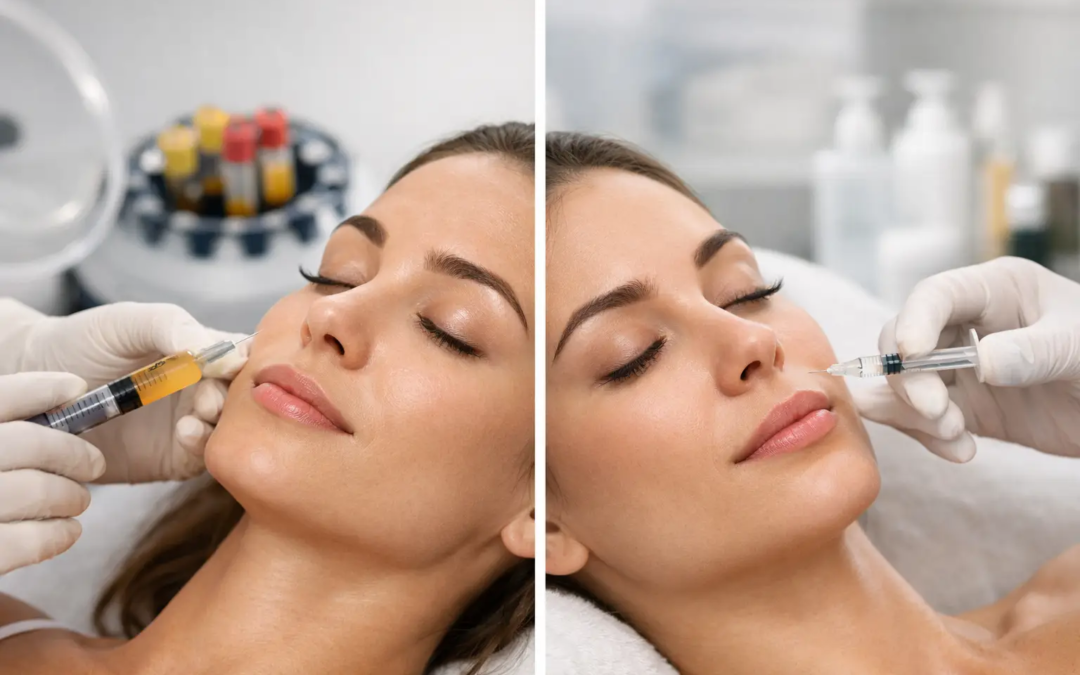
A tired-looking under-eye area, softer cheek definition, fine lines that linger after a good night’s sleep – these concerns can look similar in the mirror, but they do not always call for the same treatment. When considering a PRP facial versus fillers, the most useful question is not which option is “better.” It is whether your skin needs to rebuild, restore volume, or benefit from a thoughtful combination of both.
At Medical Advanced Skin Care, treatment planning begins with your features, skin quality, comfort level, and the kind of change you want to see. The goal is never to chase trends or create an overdone look. It is to help you look rested, healthy, and confidently like yourself.
PRP Facial Versus Fillers: The Core Difference
A PRP facial uses platelet-rich plasma, a concentrated portion of your own blood that contains growth factors. After a small blood draw, the sample is processed to separate the platelet-rich plasma. It may be applied during microneedling or placed through carefully selected injection techniques, depending on the provider’s protocol and your treatment goals.
PRP is designed to support the skin’s natural regenerative processes. It is often chosen for concerns such as dullness, crepey texture, fine lines, acne scarring, enlarged-looking pores, and the delicate under-eye area. Results develop gradually because your skin needs time to respond and produce new collagen.
Dermal fillers work differently. Most modern fillers are made with hyaluronic acid, a substance that attracts water and adds immediate structure beneath the skin. Fillers can restore volume in areas that have flattened or hollowed over time, soften certain folds, improve facial balance, and enhance contours such as the cheeks, lips, chin, or jawline.
Put simply, PRP focuses on skin quality and gradual renewal. Fillers focus on structural support and visible volume. Both can create a refreshed appearance, but they achieve it in very different ways.
What a PRP Facial Can Improve
A PRP facial is often a natural fit for clients who want their skin to look healthier rather than noticeably altered. Because PRP is derived from your own blood, it does not add a gel-like substance or create volume in the way a filler does. Its value is in encouraging a more luminous, resilient-looking complexion over time.
Many clients choose PRP when makeup begins to settle into fine lines, the under-eye area looks thin or tired, or their overall complexion has lost some of its smoothness. Pairing PRP with microneedling can be especially helpful when texture, acne scars, or early signs of collagen loss are the primary concern.
The treatment experience typically includes a blood draw, preparation of the PRP, and skin treatment with microneedling or another recommended method. Redness, warmth, and mild swelling are common immediately afterward. Most people experience a few days of social downtime, although recovery varies by skin sensitivity and treatment intensity.
PRP is not an instant fix. Some early radiance may appear once the skin settles, but collagen remodeling takes weeks. A series of treatments is often recommended for more meaningful texture or scar concerns, followed by maintenance based on your skin’s response and goals.
Where PRP Has Limits
PRP can improve the appearance of fine lines and thin, crepey skin, but it cannot reliably replace significant volume loss in the cheeks or temples. If an under-eye hollow is caused primarily by a deeper loss of facial support, PRP alone may improve the skin’s surface while leaving the shadow or contour concern largely unchanged.
That distinction matters. Choosing a regenerative treatment for a volume problem can lead to disappointment, even when the treatment itself is performed beautifully.
What Fillers Can Improve
Fillers are often the more direct option when the concern is shape, projection, or a noticeable loss of volume. They can provide immediate correction in appropriately selected areas, making them appealing for someone preparing for an event or looking for a more defined change without surgery.
For example, a cheek that appears flatter with age may benefit from carefully placed filler to restore support. A lip filler treatment may enhance lip shape or replace volume that has diminished over time. Strategic placement can also soften the look of certain lines by supporting the tissue around them rather than filling every crease.
Results are visible right away, though swelling can temporarily obscure the final outcome during the first several days. Depending on the formula used, placement area, metabolism, and amount injected, hyaluronic acid fillers may last from several months to well over a year.
A skilled injector will consider how your face moves, not just how it looks at rest. The best filler results preserve expression and proportion. More product is not automatically a better result, particularly in areas with thin skin or limited space.
Where Fillers Have Limits
Fillers do not improve every aspect of skin health. They may restore contour, but they do not meaningfully address sun damage, rough texture, visible pores, or acne scarring. In fact, using filler to chase fine lines caused by dehydrated or compromised skin can make the area look heavy rather than refreshed.
Fillers also require precise judgment. Potential side effects include bruising, swelling, tenderness, asymmetry, and lumps. Rare but serious complications can occur if filler enters a blood vessel, which is why this treatment should only be performed by a qualified, experienced medical professional who understands facial anatomy and complication management.
How to Choose Between PRP and Fillers
The decision usually becomes clearer once you separate a skin-quality concern from a volume concern. If your face still has the contours you like but your complexion appears dull, lined, or uneven, PRP may be the more aligned option. If your skin looks healthy but your cheeks, lips, temples, or lower face have lost definition, filler may offer the more noticeable improvement.
Age alone does not determine the answer. A younger client may have acne scars or under-eye crepiness that responds well to PRP. A client in their 50s may have excellent skin quality yet benefit from modest structural support. Genetics, sun exposure, weight changes, skin thickness, and facial anatomy all influence the right plan.
Your timeline also matters. Fillers deliver faster visible change, while PRP rewards patience with a gradual result. If you have a wedding or milestone approaching, it is wise to plan early rather than try a new injectable treatment immediately before the event. Allow time for swelling to resolve, for results to settle, and for any adjustments that may be appropriate.
Budget should be part of the conversation as well. PRP may be recommended as a series, while fillers are often maintained on a schedule based on the treatment area and product longevity. A personalized plan should explain expected costs, maintenance needs, and realistic outcomes before you commit.
Can You Combine PRP and Fillers?
Yes, but combination treatment should be purposeful. PRP and filler can complement one another because they address different layers of facial aging. Filler may restore lost support, while PRP can improve the quality of the skin overlying that area.
An example is the under-eye region, where shadows may come from both hollowing and thin, crepey skin. In the right candidate, a provider may discuss structural support, PRP-based rejuvenation, or a staged approach. The safest and most flattering path depends on anatomy, skin laxity, pigmentation, and whether puffiness is present.
Not everyone needs both treatments. A carefully planned single treatment can be more elegant than layering procedures without a clear reason. Ethical aesthetic care means recommending only what serves your face and your goals.
Questions Worth Asking at Your Consultation
A productive consultation should feel educational, not pressured. Ask what is creating the concern you see – volume loss, skin thinning, pigmentation, muscle movement, laxity, or a combination. Ask what improvement is realistic, how long results may last, what recovery looks like, and what alternatives may better suit your goals.
It is also reasonable to ask how the provider handles complications, whether your treatment should be staged, and what at-home skin care will help protect your investment. Medical-grade sun protection and a consistent skin care routine remain essential whether you choose PRP, fillers, or neither.
The most beautiful aesthetic results rarely come from doing the most. They come from identifying what your skin and facial structure truly need, then choosing a treatment that supports a fresh, balanced version of you.