Foundation can be beautifully matched and professionally applied, yet still catch on dry patches, settle around texture, or look less refined by midday. Often, the issue is not the makeup itself. It is the condition of the skin beneath it. Understanding how dermaplaning improves makeup application can help you decide whether this precise exfoliating treatment belongs in your skin preparation routine.
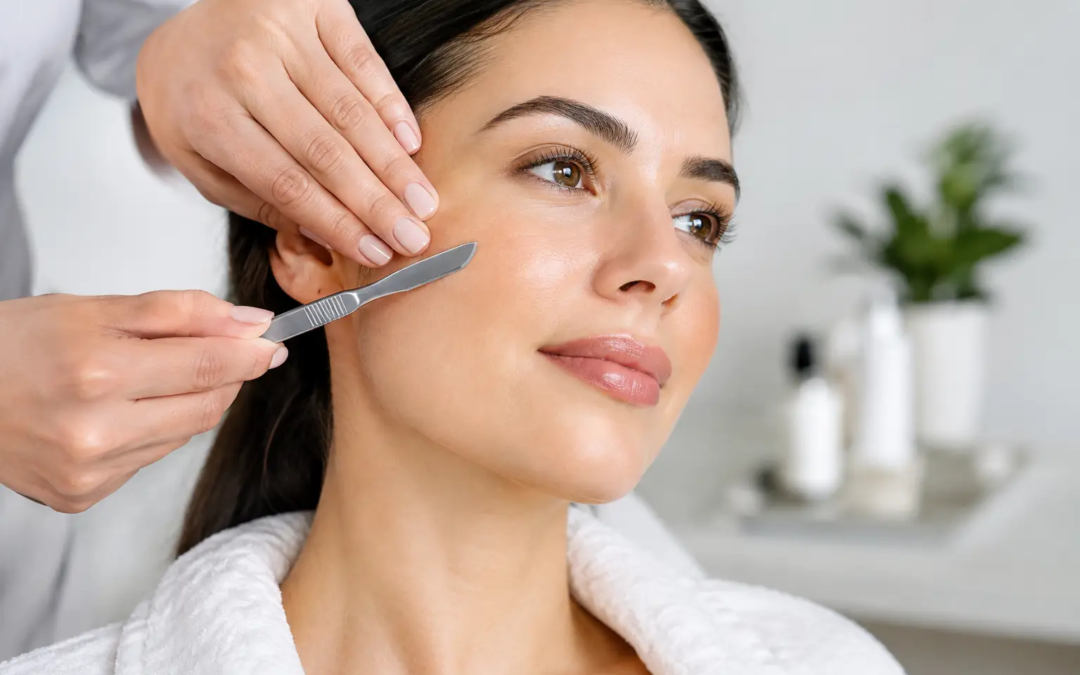
Dermaplaning gently removes the outermost layer of dull, dead skin cells along with fine facial hair, often called peach fuzz. Performed by a trained skincare professional using a sterile surgical blade, it creates a smoother, more polished-looking canvas without harsh scrubbing or extended downtime. For clients who value makeup that looks fresh, even, and naturally skin-like, the difference can be immediately noticeable.
How Dermaplaning Improves Makeup Application
Makeup adheres best to skin that is smooth, hydrated, and free of excess surface buildup. When dry, loose skin cells are sitting on the surface, complexion products can cling unevenly. This can make a luminous foundation appear powdery, cause concealer to gather in fine lines, or leave blush and bronzer looking patchy rather than softly blended.
Dermaplaning refines that surface layer. With less buildup in the way, primer can spread more evenly and foundation can glide across the skin instead of catching on rough areas. The finish is not necessarily heavier or more matte. In fact, many people find they need less product to achieve a polished result because their natural skin texture is no longer competing with the makeup.
Fine facial hair can also affect the way makeup sits, especially in bright South Florida sunlight. Peach fuzz is completely normal, but it can hold onto powder, create a slightly fuzzy appearance under foundation, or make liquid products look less uniform from certain angles. By removing this hair temporarily, dermaplaning helps complexion makeup appear smoother and more consistent in person, in photographs, and on video.
A more even finish with less product
After a professional dermaplaning treatment, tinted moisturizer, skin tint, foundation, and concealer often apply with less effort. Rather than layering product to disguise uneven texture, you may be able to use a lighter hand and let your complexion look like skin.
This is especially helpful for clients who prefer a natural finish but still want reliable coverage for discoloration, post-acne marks, or redness. Makeup can still provide the coverage you want, but it is less likely to emphasize the very texture you are trying to soften.
Cream products may also blend more smoothly after dermaplaning. Cream blush, contour, and highlight tend to melt into a freshly refined complexion rather than catching around dry areas. Powder products can look more diffused as well, provided the skin is properly moisturized and the products are applied sparingly.
Better light reflection, not an artificial shine
A common reason makeup looks especially flattering after dermaplaning is the way smoother skin reflects light. Rough, uneven surface texture scatters light in different directions, which can make the complexion appear dull. Once that superficial buildup is removed, the skin often has a brighter, more even-looking quality before any makeup is applied.
That does not mean dermaplaning changes pore size, erases lines, or replaces a complete corrective treatment plan. It is a surface-level service, and its benefits are best understood that way. Still, when paired with thoughtful skincare and well-chosen makeup, that smoother surface can make a meaningful visual difference.
Why Professional Technique Matters
Dermaplaning is sometimes treated as a simple at-home shaving step, but professional dermaplaning is more precise than using a facial razor in the bathroom mirror. The provider evaluates your skin, holds it taut, works at the appropriate angle, and avoids areas that may be inflamed, compromised, or unsuitable for treatment.
This level of care matters because over-exfoliation can leave skin feeling sensitive, tight, or reactive. A trained professional can also determine whether dermaplaning should be a stand-alone service or part of a personalized facial plan. For some clients, combining it with a hydrating treatment or an appropriate facial protocol supports an even more refreshed, makeup-ready result.
Dermaplaning does not make facial hair grow back darker, thicker, or faster. The hair may feel different as it grows in because the tip has been cut bluntly, but the treatment does not alter the hair follicle or change its growth pattern.
Who may need a different approach
Not every complexion should be dermaplaned on every visit. If you have active inflammatory acne, open lesions, sunburn, eczema or rosacea that is flaring, a current skin infection, or significant irritation, postponing treatment is generally the wiser choice. Passing a blade over inflamed skin can aggravate discomfort and may spread bacteria across the face.
Certain prescription skincare products and recent procedures may also affect your timing. Retinoids, strong exfoliating acids, chemical peels, laser treatments, and other resurfacing services all require careful spacing. This is where an individualized consultation matters. Ethical skincare is not about adding more treatments. It is about choosing the right treatment, at the right time, for the skin in front of you.
How to Prepare for Makeup After Dermaplaning
The best makeup results begin with respectful aftercare. Directly after dermaplaning, skin can be more receptive to hydrating skincare, but it may also be temporarily more sensitive. Keep the routine gentle and focused on moisture, barrier support, and daily sun protection.
For the first day or two, avoid testing a new active serum, scrubbing the skin, or applying strong acids and retinoids unless your provider has given you specific instructions. Skip abrasive brushes and heavily fragranced products if your skin tends to react. Instead, use a gentle cleanser, a nourishing moisturizer, and broad-spectrum SPF during the day.
If you plan to wear makeup the same day, choose clean brushes and sponges and use lightweight, non-irritating formulas. Many clients prefer to schedule dermaplaning a few days before an event, photoshoot, wedding, or vacation. This gives the skin time to settle while preserving that exceptionally smooth makeup application window.
Timing depends on your skin and your provider’s guidance. Some people experience mild temporary pinkness, while others have little visible redness at all. If your complexion is sensitive or you are preparing for an important occasion, plan ahead rather than booking your first dermaplaning session the morning of the event.
Make Dermaplaning Part of a Skin-First Routine
Dermaplaning can elevate the way makeup looks, but its value goes beyond a single great foundation day. When incorporated thoughtfully into a professional maintenance plan, it can support a brighter-looking complexion, smoother-feeling texture, and more enjoyable daily skincare ritual.
The right frequency varies. Many clients schedule dermaplaning about every four to six weeks, allowing the skin to complete its natural renewal process and fine facial hair to regrow. More frequent treatment is not automatically better. Your ideal schedule should account for your sensitivity level, skincare products, lifestyle, and larger skin goals.
At Medical Advanced Skin Care, dermaplaning is approached as personalized clinical beauty, not a one-size-fits-all add-on. Whether your goal is more even makeup, renewed radiance, or a refined treatment plan for ongoing texture concerns, a professional assessment can clarify what will genuinely serve your skin.
A smooth makeup finish is satisfying, but the real confidence comes from seeing your natural complexion look cared for even after the makeup comes off. When your skin is treated with the right level of expertise and consistency, every product you apply has a better place to begin.