If your skin breaks out after the wrong product, reacts to heavy creams, or stays congested no matter how carefully you cleanse, choosing the best facial for acne prone skin can feel less like self-care and more like risk management. The truth is that acne-prone skin does not need harsher treatment. It needs the right treatment – one that clears buildup, respects inflammation, and supports healthier skin over time.
That is where professional guidance matters. Not every facial marketed for acne is actually a good fit for active breakouts, post-acne marks, or sensitive, oil-prone skin. Some treatments can calm and clarify beautifully. Others can leave skin irritated, stripped, or more inflamed than before.
What makes the best facial for acne prone skin?
The best facial for acne prone skin is rarely the most aggressive one. Acne can look similar from person to person, but the cause and condition of the skin can be very different. One client may be dealing with clogged pores and excess oil. Another may have inflamed blemishes, a compromised barrier, and dark marks left behind after every breakout.
A strong acne facial should do three things well. It should deeply cleanse and decongest pores, reduce irritation rather than trigger more of it, and support long-term skin health instead of giving only a short-lived glow. That balance is what separates a corrective treatment from a generic spa facial.
This is also why customization matters. The right treatment may change depending on whether you have active acne, hormonal breakouts along the jawline, acne scarring, or skin that is both breakout-prone and sensitive.
The professional facials that tend to work best
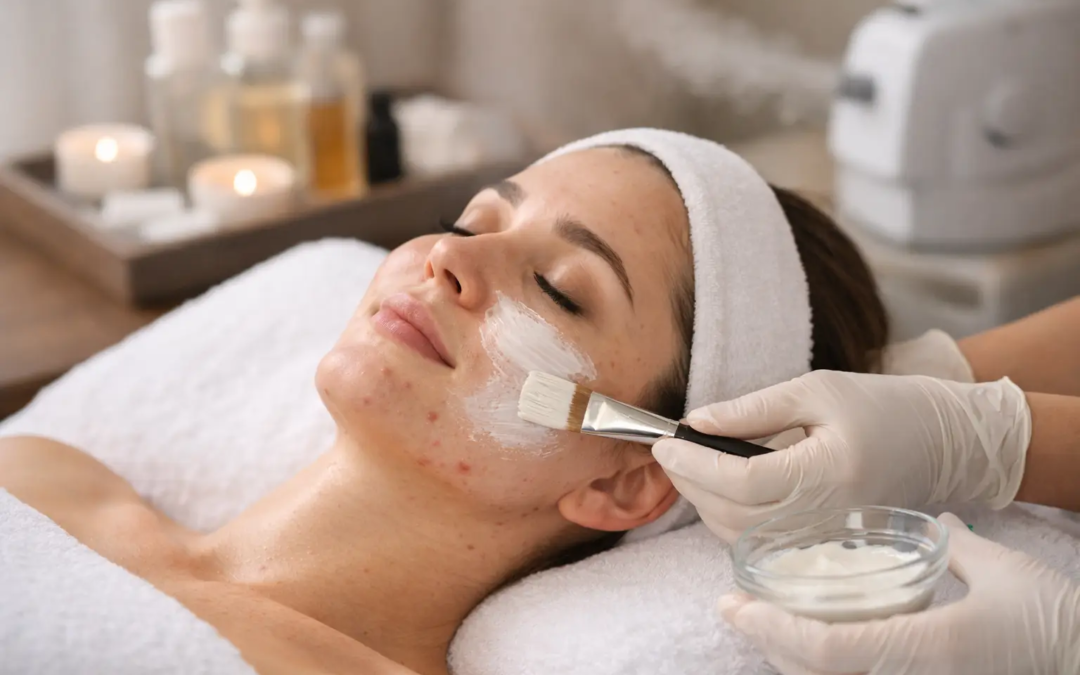
For many adults, HydraFacial is one of the most reliable options. It combines cleansing, exfoliation, gentle extraction, and hydration in a way that feels effective without being overly abrasive. Acne-prone skin often needs help clearing out dead skin cells and trapped debris, but it also needs water and barrier support. A treatment that does both can leave skin clearer and calmer instead of tight and angry.
HydraFacial can be especially helpful for blackheads, congestion, and oily skin that still feels dehydrated. It is not the answer for every acne type, but it is often a strong starting point for clients who want visible improvement with minimal downtime.
Chemical peels can also be excellent for acne-prone skin when chosen carefully. A well-selected peel helps loosen pore-clogging buildup, improve skin turnover, and soften the look of post-acne discoloration. Salicylic acid-based peels are often useful because salicylic acid is oil-soluble, which means it can work inside the pore lining where congestion starts.
That said, stronger is not always better. If the skin is inflamed, peeling excessively, or already sensitized by overuse of acids and actives at home, an aggressive peel may backfire. In those cases, a gentler corrective approach usually creates better results.
Oxygen facials can be a good supportive treatment when acne-prone skin is also stressed, dull, or healing. They are generally not the first line for deeply congested pores, but they can be helpful when the goal is to soothe skin, support recovery, and maintain a healthier-looking complexion between more corrective services.
For clients dealing more with the aftermath of acne than constant active breakouts, treatments like SkinPen microneedling may become part of the plan. Microneedling is typically more appropriate for acne scarring and textural irregularities once active acne is under control. It is not usually the first choice over inflamed breakouts, but it can be a powerful next step when the goal shifts from clearing acne to rebuilding smoother skin.
What to avoid if your skin breaks out easily
The wrong facial for acne-prone skin often has one thing in common: too much stimulation without enough strategy. Heavy oils, fragranced products, overly aggressive scrubs, and intense manual manipulation can all create setbacks.
Classic spa facials that focus mostly on relaxation may feel lovely, but they are not always designed to address acne at the source. If the treatment includes rich occlusives, rough exfoliation, or products not selected for acne-prone skin, you may leave glowing for a day and then break out for a week.
Over-extraction is another common issue. Proper extractions can help, especially for blackheads and congestion. But forcing inflamed lesions or spending too much time on irritated areas can increase redness, prolong healing, and raise the risk of post-inflammatory marks.
The best choice depends on your kind of acne
This is where a lot of online advice falls short. Acne is often discussed as though it is one condition with one solution. In practice, there are different patterns, and they do not all respond to the same facial.
If you mainly have clogged pores, blackheads, and rough texture, a deep-cleansing treatment with gentle exfoliation and extractions may be ideal. If your acne is red, tender, and inflamed, your skin may benefit more from a calming corrective facial and a cautious treatment schedule. If you are seeing lingering brown or red marks after breakouts fade, chemical peels and other resurfacing options may help more than repeated basic facials.
Hormonal acne can be especially frustrating because it often has an internal trigger. Professional facials can still improve congestion, inflammation, and recovery time, but they may need to be part of a broader plan rather than treated as a one-time fix.
Why medical-grade customization matters
Acne-prone skin responds best when treatment decisions are based on skin condition, history, and tolerance – not trends. A medical aesthetics setting can be especially helpful because the approach is typically more precise. Instead of asking what is popular, the better question is what your skin can benefit from right now.
That might mean starting with a HydraFacial series to clear congestion while protecting the skin barrier. It might mean rotating in a peel once the skin is more stable. It might mean postponing more advanced resurfacing until active breakouts are controlled.
At Medical Advanced Skin Care, that kind of customization is part of what makes treatment feel both elevated and responsible. Acne-prone skin needs expertise, but it also needs patience. Real improvement usually comes from choosing the right sequence, not chasing the most dramatic service.
How often should you get a facial for acne-prone skin?
There is no perfect schedule for everyone, but consistency matters more than intensity. For some clients, monthly treatments create the best rhythm for keeping pores clear and skin balanced. Others may benefit from a short series closer together at the beginning, followed by maintenance visits.
The right timing depends on the treatment itself, the severity of your breakouts, and what you are using at home. A person getting corrective peels may follow a different schedule than someone maintaining results with HydraFacial. The key is not to overload the skin with too much treatment too quickly.
Your home routine still matters
Even the best facial for acne prone skin cannot fully offset a home routine that clogs, strips, or irritates. Professional treatments work best when they are supported by the right cleanser, moisturizer, sunscreen, and acne-focused actives.
This does not mean your routine has to be complicated. In fact, acne-prone skin often does better when it is not overwhelmed. A few well-chosen products usually outperform a crowded shelf of acids, spot treatments, and trending serums used all at once.
If your skin feels dry, flaky, and breakout-prone at the same time, that is often a sign that barrier support is being overlooked. When the barrier is healthier, skin often becomes less reactive and better able to tolerate corrective care.
So what is the best facial for acne prone skin?
For many adults, the best starting point is a treatment that combines deep cleansing, gentle exfoliation, careful extractions, and hydration without creating unnecessary irritation. That is why HydraFacial is so often a top choice. For others, especially those dealing with stubborn congestion or acne marks, a customized chemical peel may be more effective. And for post-acne texture and scarring, microneedling may become the best option once active breakouts are controlled.
The real answer is less about picking the trendiest facial and more about matching the treatment to your skin’s current needs. Acne-prone skin does not need punishment. It needs a plan.
If you have been guessing your way through facials and hoping for the best, this is a good time to shift the approach. The right treatment should leave your skin feeling clearer, calmer, and more supported – and that kind of progress tends to build confidence just as much as it builds better skin.