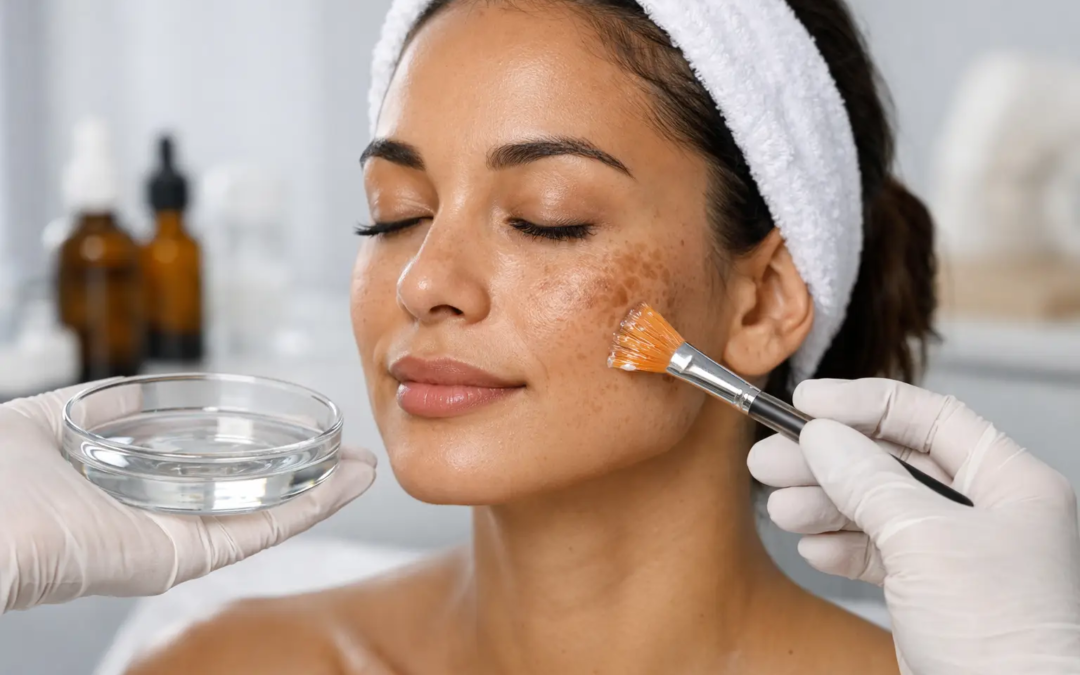
Dark spots rarely show up at a convenient time. For many people in South Florida, pigmentation builds gradually from sun exposure, acne marks, hormonal changes, or the natural aging process – then seems to linger far longer than it should. A chemical peel for hyperpigmentation can be an effective way to fade uneven tone, brighten dull skin, and restore a clearer, more even-looking complexion, but the right results depend on choosing the right peel, depth, and treatment plan for your skin.
Hyperpigmentation is a broad term, and that matters. Sun spots, post-inflammatory hyperpigmentation from breakouts, and melasma may all look similar at first glance, but they do not always respond the same way. This is why a personalized approach is essential. A peel that helps one patient beautifully may be too aggressive, too mild, or simply the wrong match for another.
How a chemical peel for hyperpigmentation works
A chemical peel uses carefully selected acids to exfoliate the outer layers of the skin and encourage cell turnover. As damaged, pigmented cells shed, fresher skin comes forward. Over time, this process can reduce the appearance of discoloration and improve overall tone and texture.
The key phrase there is over time. While some clients notice a brighter look after one session, hyperpigmentation often responds best to a series of treatments combined with the right home care. Peels are rarely a one-and-done solution, especially when pigment has been present for months or years.
Different peeling agents target the skin in different ways. Alpha hydroxy acids such as glycolic acid can help with surface-level discoloration and rough texture. Salicylic acid is often useful when acne and post-acne marks overlap. TCA peels may offer stronger correction for certain concerns, but they require more caution, downtime, and clinical judgment. In some practices, customized blends are used to address both pigmentation and the underlying triggers that keep it coming back.
Not all hyperpigmentation should be treated the same way
This is where nuance matters most. Hyperpigmentation is not just extra pigment sitting on the surface. In some cases, the pigment is more superficial and responds fairly predictably. In others, it is deeper, hormonally influenced, or easily reactivated by heat, irritation, and UV exposure.
Melasma is the best example. It can improve with the right chemical peel for hyperpigmentation, but it can also flare if treatment is too aggressive or if post-care is inconsistent. Patients with melasma often need a more strategic plan that includes gentle but consistent in-office treatments, pigment-regulating skincare, and strict sun protection.
Post-inflammatory hyperpigmentation is another common concern, particularly after acne, shaving irritation, or skin trauma. These marks often fade well with peels, but only if the source of inflammation is also being managed. If breakouts continue unchecked, new marks can replace the old ones.
Sun damage tends to respond well when peels are used thoughtfully and paired with daily SPF. In Florida, that point cannot be overstated. Without sun protection, even a beautifully performed peel can be undermined by ongoing UV exposure.
What kind of peel is best?
The best peel is not necessarily the strongest one. In fact, chasing intensity can backfire, especially for patients with medium to deeper skin tones or skin that is already reactive. The goal is controlled improvement, not pushing the skin past what it can safely tolerate.
Light to medium-depth peels are often the most practical place to start for pigmentation concerns. They can brighten the complexion, soften patchy discoloration, and improve skin clarity with less downtime than deeper peels. For many patients, a series of lighter treatments produces more reliable and elegant results than one aggressive session.
Skin tone plays a major role in peel selection. Deeper complexions are more prone to post-inflammatory pigment changes if the skin becomes overly irritated. That does not mean peels are off the table. It means treatment should be selected and performed with experience, precision, and respect for how your skin responds.
At a clinic like Medical Advanced Skin Care, this is where consultation becomes more than a formality. A proper evaluation should look at your pigmentation pattern, skin type, sensitivity, current skincare, lifestyle, and treatment goals before recommending any peel protocol.
What results should you expect?
A realistic answer is that it depends on the type of pigmentation, how long it has been present, and how consistent you are with aftercare. Some patients see visible brightening after one treatment. Others need several sessions before the dark areas begin to break up and fade in a meaningful way.
Most people can expect improvements in overall radiance fairly quickly. More stubborn pigment usually takes longer. Melasma may lighten, then require maintenance. Acne marks may respond well if inflammation is controlled. Sun spots can soften significantly, though years of cumulative damage may need a broader corrective plan.
This is also where expectations should stay grounded. A chemical peel for hyperpigmentation can improve uneven tone dramatically, but it may not erase every spot completely. The most satisfying outcomes often come from a long-term strategy focused on correction and maintenance, not perfection.
Downtime, peeling, and what recovery really feels like
Many people assume a chemical peel always leads to dramatic shedding. Sometimes it does, but not always. Visible peeling depends on the formula, strength, and your individual skin response. You may experience mild flaking, tightness, dryness, or redness for a few days. Stronger peels can bring more noticeable peeling and a longer recovery period.
The more important question is not whether you peel, but whether your skin heals well. Proper post-treatment care helps protect the skin barrier while new skin emerges. That usually means avoiding exfoliants for several days, using gentle hydration, keeping the skin cool and calm, and being disciplined about sunscreen.
Patients who want brighter skin with minimal social downtime often do well with a series of lighter peels spaced appropriately apart. Patients seeking stronger correction may accept more recovery in exchange for a more pronounced result. Neither approach is universally better. It comes down to your skin, schedule, and goals.
Who is a good candidate for a chemical peel for hyperpigmentation?
Good candidates are usually those with stable skin, realistic expectations, and a willingness to follow pre- and post-care instructions carefully. If your discoloration has been bothering you and over-the-counter products have only delivered modest improvement, a professionally selected peel may be a very worthwhile next step.
That said, timing matters. If you are actively sunburned, experiencing a rash, dealing with uncontrolled acne inflammation, or using certain prescription topicals, treatment may need to be delayed or adjusted. If you are pregnant or breastfeeding, some peeling agents may not be appropriate. This is why a detailed consultation matters as much as the peel itself.
It is also worth noting that some patients need combination care. If pigmentation is paired with rough texture, acne scarring, or vascular redness, a peel may be one part of a larger treatment plan rather than the entire answer.
How to make your results last longer
Pigment has a frustrating habit of returning when the triggers are still present. That is why maintenance is part of successful treatment, not a sign that something failed.
Daily SPF is non-negotiable. In South Florida, heat and UV exposure are part of daily life, and even brief incidental sun can keep pigmentation active. A strong home regimen also matters. Depending on your skin, this may include brightening ingredients, antioxidants, gentle retinoids, and barrier-supporting hydration.
Consistency beats intensity. Patients often do better with a thoughtful series of professional treatments and a steady home program than with occasional aggressive procedures. Healthy skin tends to respond more predictably and hold results longer.
The value of professional guidance
There is a reason chemical peels remain a trusted treatment for uneven pigmentation. They can be customized, layered into a broader skin plan, and adjusted over time as your skin improves. But they are not interchangeable, and they should not be treated like a generic menu item.
When hyperpigmentation is addressed with clinical expertise and a personalized approach, peels can do more than brighten the skin. They can help restore confidence, soften the evidence of breakouts and sun damage, and move your complexion toward a healthier, more even baseline.
If you are considering a chemical peel, the smartest first step is not choosing the strongest option. It is choosing a provider who understands how to treat pigment safely, beautifully, and with your long-term skin health in mind. The right plan should leave you looking refreshed, not overtreated – and feeling more confident each time you look in the mirror.