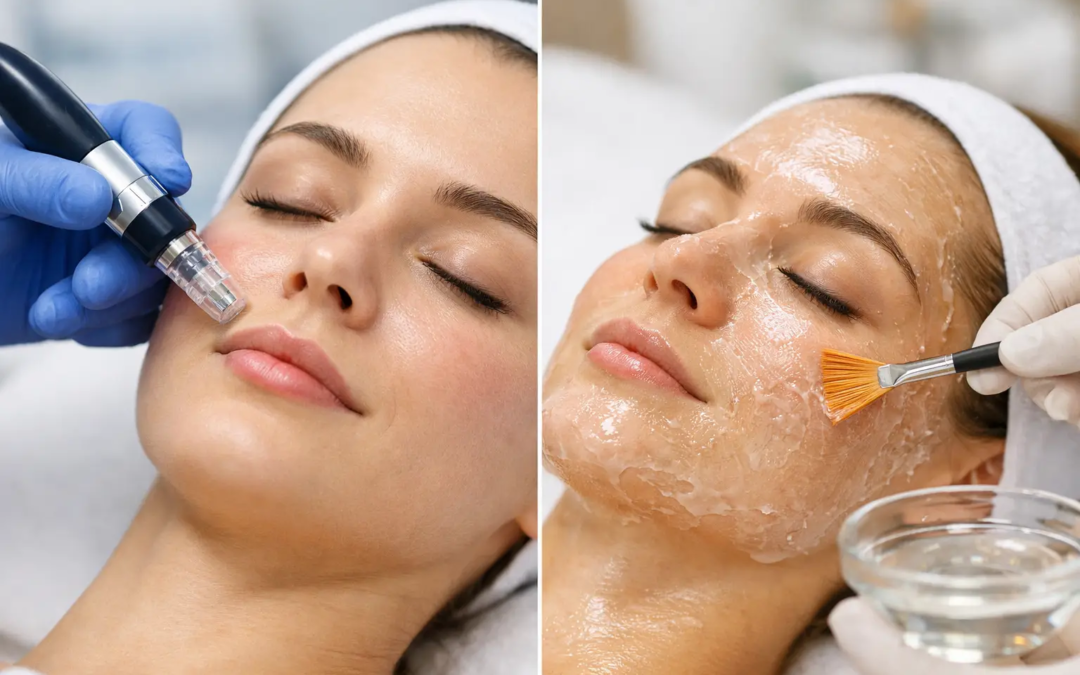
If your skin looks tired in bright Florida sunlight, the question usually is not whether to treat it. It is which treatment will give you the kind of change you actually want. When clients ask about microneedling vs chemical peel results, they are usually comparing two very different paths to smoother texture, clearer tone, and healthier-looking skin.
Both treatments can be excellent. Both can also disappoint if they are chosen for the wrong concern, done at the wrong strength, or expected to do too much in a single session. The best choice depends on what you want to improve, how much downtime you can tolerate, and how your skin behaves under stress.
Microneedling vs chemical peel results: what changes first?
Microneedling works by creating controlled micro-injuries in the skin. That process stimulates the skin’s repair response and encourages collagen remodeling over time. Because of that, the most meaningful microneedling results tend to show up in texture, acne scarring, enlarged pores, and early signs of laxity. Skin often looks fresher within days, but the deeper improvements are gradual.
Chemical peels work differently. A peel uses a carefully selected acid blend to exfoliate the skin and accelerate cell turnover. Depending on the formula and depth, a peel can brighten dullness, improve pigmentation, smooth rough surface texture, and help with active acne. Many people notice a more immediate glow after a peel, especially with lighter formulations, while stronger peels may require a more visible recovery period before the improvement fully appears.
So if you are comparing first impressions, peels often deliver faster visible brightness. If you are thinking about longer-term collagen support and textural remodeling, microneedling usually has the edge.
Which treatment is better for your main concern?
The real answer starts with your skin goal, not the treatment name.
Acne scars and uneven texture
For indented acne scars and rough texture, microneedling is often the stronger option. It helps break up the appearance of shallow atrophic scarring by encouraging new collagen formation under the surface. Results are not instant, and a series is usually needed, but this is where microneedling often outperforms a standard peel.
A chemical peel can still help acne-prone skin, especially if there is congestion, post-acne discoloration, or surface roughness. But if the scar is structural and sits below the surrounding skin, exfoliation alone may not create the same level of change.
Pigmentation and sun damage
When discoloration is the main issue, chemical peels often shine. Brown spots, uneven tone, and dull skin caused by sun exposure often respond well to a professionally selected peel. In South Florida, where UV exposure is intense year-round, this matters. A peel can help lift damaged surface cells and improve overall clarity faster than microneedling in many pigment-focused cases.
That said, pigment is where treatment planning needs to be thoughtful. Some forms of melasma and post-inflammatory hyperpigmentation can flare if the skin is over-treated. For certain clients, gentler peels or a carefully managed combination plan may be safer than aggressive resurfacing.
Fine lines and early aging
Microneedling tends to be a strong choice for fine lines that come from collagen loss and crepey texture. It supports the skin’s own rebuilding process, which can create a firmer, smoother look over time. This is especially appealing for clients who want rejuvenation without looking overdone.
Chemical peels can still soften the appearance of fine lines, especially superficial lines that are made more noticeable by dry, rough skin. They can make the skin look brighter and more polished, but deeper age-related texture changes often respond better to collagen-focused treatments.
Active acne and congestion
A chemical peel is often more effective for active breakouts, oily skin, and clogged pores. Certain peel formulas help reduce congestion, support exfoliation, and calm the cycle that leads to frequent acne. Microneedling is generally not the first choice when acne is inflamed or actively erupting because the skin barrier is already stressed.
Downtime matters more than most people expect
One of the biggest differences in microneedling vs chemical peel results is how those results arrive.
After microneedling, the skin usually looks pink to red for a day or two, sometimes a little longer depending on depth and sensitivity. It can feel warm, tight, and dry before settling into a smoother appearance. Most clients feel comfortable returning to normal routines quickly, with the right aftercare.
After a chemical peel, downtime can range from almost none to several days of visible peeling. A light peel may leave you glowy with minor flaking. A stronger peel can bring redness, dryness, peeling around the mouth and nose, and a phase where the skin looks worse before it looks better. For some people, that is completely worth it. For others, it does not fit work, social plans, or comfort level.
If you want a treatment that feels progressive and predictable, microneedling may feel easier. If you are comfortable with temporary peeling for the sake of clearer, brighter skin, a peel may suit you well.
How many sessions does it take?
This is where expectations need to stay realistic.
Microneedling often works best as a series. Many clients need three to six sessions for noticeable improvement in scars, pores, or fine lines, with collagen changes continuing to build after each appointment. The payoff is cumulative rather than dramatic overnight.
Chemical peels can also be done in a series, especially for pigmentation, acne, or chronic dullness. Some people love the boost they see after one peel, but deeper discoloration and long-standing texture concerns usually improve more with repeated treatments.
In other words, neither treatment should be judged only by one appointment unless your concern is very mild. Skin remodeling and controlled resurfacing both reward consistency.
Skin tone, sensitivity, and safety
The right treatment is not only about results. It is also about what your skin can tolerate safely.
Darker skin tones and pigment-prone skin require careful treatment selection. Both microneedling and chemical peels can be appropriate, but the protocol matters. Depth, peel strength, prep, post-care, and timing all influence the outcome. A treatment that is too aggressive can create irritation and trigger unwanted discoloration.
Sensitive skin also changes the equation. Some clients tolerate microneedling better than stronger peels. Others find that a gentle peel gives them glow without the inflammation they fear from needling. This is why a personalized consultation matters. The same treatment that works beautifully for one person can be the wrong fit for another.
Can you combine them?
Sometimes the best answer is not either-or.
Microneedling and chemical peels can complement each other when they are spaced appropriately and chosen for the right reasons. A peel may help manage pigment, congestion, and dullness, while microneedling focuses on acne scars, pores, and collagen support. The sequence and timing matter, and skin should never be pushed simply to chase faster change.
At Medical Advanced Skin Care, that kind of planning is what makes advanced skincare feel both effective and safe. The goal is not to sell the strongest treatment. It is to build a treatment path that gives visible improvement while respecting your skin barrier, your schedule, and your long-term skin health.
So which delivers better results?
If your priority is acne scars, pore refinement, and collagen-driven texture improvement, microneedling often delivers better long-term value. If your priority is pigmentation, dullness, active acne, and a brighter overall tone, a chemical peel may produce the more satisfying result sooner.
There are also cases where the answer is less obvious. A client with post-acne marks, mild scarring, and uneven tone may benefit from both at different stages. Someone with melasma may need a conservative approach that avoids over-stimulation. A client preparing for an event might prefer a lighter peel for quick radiance rather than a collagen-based treatment that takes time to mature.
That is the trade-off at the center of microneedling vs chemical peel results. One treatment often builds deeper structural improvement over time. The other can create faster surface-level refinement and clearer tone. Neither is universally better. The best one is the one that matches your skin, your goals, and the timeline you can realistically support.
Beautiful skin rarely comes from chasing the trendiest treatment. It comes from choosing the right one, at the right time, with a plan built around real results and healthy skin you can feel confident in long after the appointment.