The most meaningful microneedling results are not always visible the morning after treatment. While many clients notice an early glow, the real transformation happens gradually as skin repairs itself and produces fresh collagen. Understanding microneedling results month by month can make the process feel more reassuring, especially if your goals include smoother texture, softened acne scars, refined pores, or a firmer, healthier-looking complexion.
At Medical Advanced Skin Care, every SkinPen® microneedling plan is personalized around your skin, history, and desired outcome. Your timeline may look different from someone else’s, but there is a predictable healing pattern worth knowing before you begin.
What microneedling is doing beneath the surface
Microneedling uses precise, controlled microchannels to trigger the skin’s natural repair response. In response, the body begins producing collagen and elastin, the supportive proteins associated with skin that looks smoother, more resilient, and more even in texture.
This is why the treatment is not a quick fix in the traditional sense. Surface recovery may take only a few days, but collagen remodeling takes weeks. Skin must build, organize, and strengthen new supportive tissue over time. That gradual process is also what makes professional microneedling such a valuable option for clients who want visible renewal without surgery or extended downtime.
Your starting point matters. Fine lines, enlarged pores, mild texture concerns, and dullness can respond differently than deep acne scarring or more established photoaging. The depth of treatment, your home care, sun exposure, age, and the number of sessions in your plan all influence the pace and degree of change.
Microneedling results month by month
Days 1 through 7: Healing and an early glow
Immediately after a professional microneedling treatment, skin often appears pink to red, similar to a mild sunburn. Some clients experience warmth, tightness, dryness, pinpoint bleeding, or mild swelling, particularly in delicate areas. These effects are expected and generally settle within a few days, although sensitivity can last longer depending on treatment intensity and skin type.
By day two or three, the skin may feel dry or slightly rough. Light flaking can occur as the surface barrier recovers. This is not the time to exfoliate, pick, scrub, or introduce active products unless your provider has directed you to do so. Gentle cleansing, hydration, medical-grade recovery products, and diligent sunscreen help protect the investment you have made in your skin.
Many people notice a fresh, hydrated-looking glow by the end of the first week. It is encouraging, but it is still early. The deeper collagen response is only beginning.
Weeks 2 through 4: Texture starts to look more refined
During the first month, redness has usually resolved and the complexion often begins to look calmer and more polished. Makeup may apply more smoothly, pores can appear less noticeable, and skin may reflect light more evenly. For clients treating superficial texture or dullness, these early improvements can feel significant.
This stage can also test your patience if your primary concern is acne scarring or deeper lines. A single treatment may improve overall quality, but deeper concerns rarely disappear in four weeks. Collagen production is underway, not complete.
Avoid judging your final result too early. A consistent skincare routine, daily broad-spectrum sunscreen, and avoiding excess heat or sun exposure when advised all help preserve progress. South Florida’s intense UV exposure can quickly undermine pigment and collagen goals when skin is not adequately protected.
Month 2: Collagen renewal becomes more visible
Around six to eight weeks after treatment, many clients notice a more meaningful change in skin texture and firmness. This is when new collagen begins to have a more visible effect at the surface. The complexion may look smoother, fine lines can appear softened, and areas with mild acne scarring may start to look less sharply defined.
Results at month two often feel natural rather than dramatic. Friends may say you look rested or that your skin looks particularly healthy without being able to identify why. That subtle, refreshed quality is one reason microneedling works so well for people who want improvement that still looks like them.
If your treatment plan includes a series, month two may also be when your next appointment is scheduled. Treatments are commonly spaced about four to six weeks apart, though the right interval depends on your skin and the protocol your provider recommends. Treating too frequently does not force faster collagen growth. Skin needs adequate time to respond and recover.
Month 3: A stronger, more established result
By the third month, the changes from an initial microneedling session are often more established. Skin may feel firmer, look more even, and show a clearer improvement in texture. Fine lines may look less etched, and some acne scars may appear shallower or blend more smoothly with surrounding skin.
For many clients, this is also when the value of a series becomes clear. Microneedling creates a cumulative effect. Each well-timed session builds on the previous treatment, supporting ongoing collagen remodeling rather than asking one appointment to address every concern.
A typical recommendation may be a series of three to six treatments for acne scars, texture concerns, or more visible signs of aging. Lighter maintenance goals may require fewer initial sessions, followed by periodic treatments to support long-term skin quality. The right number is never one-size-fits-all.
Months 4 through 6: Continued improvement and maintenance planning
Collagen remodeling can continue for several months after a treatment series. At this stage, clients often see the most satisfying combination of smoother texture, improved radiance, and a more refined overall appearance. Results tend to look integrated and natural because the improvement comes from the skin’s own rebuilding process.
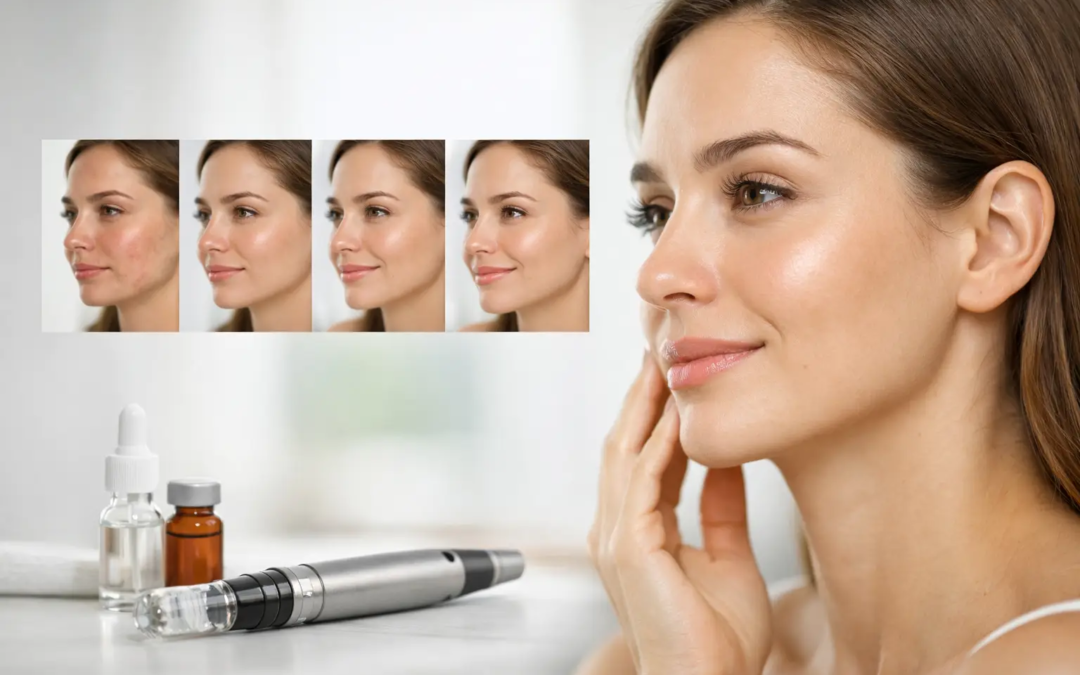
This is a good time to review before-and-after photos with your provider. Daily mirror checks can make gradual change difficult to recognize, while standardized photos can reveal improvements in tone, texture, and scar visibility that are easy to overlook.
Maintenance depends on your goals, lifestyle, and skin condition. Some clients schedule microneedling seasonally or every few months, while others pair it with treatments such as HydraFacial®, chemical peels, or BBL™ at different points in the year. Combination planning should be intentional. Not every treatment belongs in the same week, and proper spacing protects the skin barrier while allowing each service to deliver its best result.
What can affect your microneedling timeline?
Your results will be influenced by more than the treatment itself. A professional provider will consider active acne, rosacea, melasma, history of hyperpigmentation, current medications, and recent use of retinoids before recommending microneedling. In some cases, another treatment or a period of skin preparation may be the safer first step.
PRP may also be recommended for certain clients who want to complement their microneedling protocol. Because PRP uses components from your own blood, it can be a thoughtful option for supporting recovery and rejuvenation when medically appropriate. It is not necessary for everyone, and ethical treatment planning means choosing it only when it aligns with your needs and goals.
Home care matters just as much. Smoking, unprotected sun exposure, dehydration, inconsistent skincare, and aggressive use of acids or retinoids can interfere with recovery. On the other hand, following your aftercare instructions and using clinician-recommended products can help your skin respond more comfortably and consistently.
When to call your provider
Temporary redness, tightness, and light dryness are common after microneedling. However, contact your provider if you experience worsening pain, significant swelling, blistering, persistent heat, signs of infection, or a reaction that concerns you. Professional treatment should always come with clear aftercare guidance and access to a team that takes your recovery seriously.
The best microneedling results are built with realistic expectations, skilled technique, and a plan designed around your skin rather than a trend. If you are ready for smoother, healthier-looking skin, a personalized consultation can clarify what your month-by-month progress may look like and help you begin with confidence.