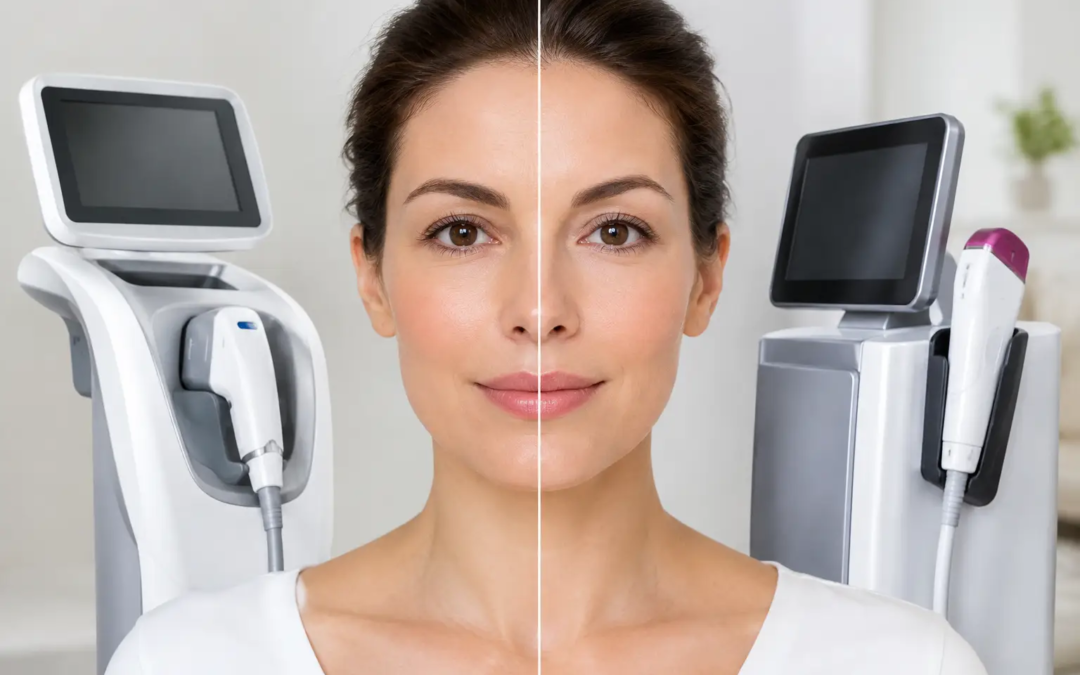
A jawline that looks less defined in photos, skin that feels a little looser at the cheeks, or fine lines that seem more noticeable than they used to can make surgical options feel tempting. Yet many people want a meaningful refresh without incisions or an extended recovery. Ultraformer versus Thermage is a common comparison because both treatments address skin laxity, but they do it with different energy technologies, treatment experiences, and timelines.
The right choice is rarely about which device has the bigger reputation. It is about where your laxity is located, how much tightening you want, your comfort preferences, and whether your skin may benefit from a treatment plan that combines technologies over time.
Ultraformer versus Thermage: The Core Difference
Ultraformer III uses focused ultrasound energy to create precise points of heat at selected depths beneath the skin. Depending on the treatment area and cartridge used, the energy can target superficial layers, deeper dermal tissue, and the structural layer often associated with facial support. The body responds to these controlled thermal points by beginning a gradual collagen-building process.
Thermage uses radiofrequency energy, most commonly monopolar radiofrequency, to heat collagen-rich tissue more broadly. This controlled heating is designed to encourage collagen contraction and stimulate new collagen production over the months that follow. Thermage is widely known as a single-session treatment for the face, eyes, and body.
Both can improve the appearance of mild to moderate laxity without surgery. The distinction is in how and where the energy is delivered. Ultraformer is often selected when deeper lifting support and more targeted contouring are priorities, particularly along the jawline, under the chin, and through the lower face. Thermage may be appealing for clients who want broad collagen stimulation and smoothing, including areas with crepey texture or fine lines.
What Results Can You Expect?
Neither treatment creates the immediate, dramatic change of a facelift. That is not a limitation to hide. It is an essential part of making an informed decision. These treatments work with your own collagen response, so results develop gradually and look naturally refreshed rather than surgically altered.
With Ultraformer III, some clients notice a subtle early tightening effect, followed by more visible improvement over approximately two to three months as collagen remodeling progresses. Results can continue to refine for several additional months. The goal is often a firmer-looking lower face, a more defined chin and jawline, or a lifted appearance through areas such as the brow.
Thermage may also create an early sense of tightness, while the more meaningful changes typically evolve over two to six months. Clients often describe improved skin smoothness, a firmer appearance, and softened fine lines. The outcome depends on the area treated, baseline collagen levels, skin quality, and the degree of laxity present before treatment.
For both options, results are typically most satisfying for people with early to moderate skin laxity. If there is significant skin excess or pronounced tissue descent, non-surgical energy treatments may offer improvement but may not meet expectations for a major lift. An honest consultation protects you from investing in a treatment that cannot realistically deliver the change you have in mind.
Treatment Areas and Aesthetic Goals
Ultraformer III is especially versatile for facial contouring. Focused ultrasound can be customized for the forehead, brow area, cheeks, jawline, submental area, neck, and selected body concerns. It may be an excellent fit for someone whose main concern is a softer jawline, early jowling, or fullness and laxity beneath the chin.
Thermage is often considered for the face, neck, eye area, abdomen, arms, thighs, and other areas where skin looks thinner, looser, or more crepey. It can be a compelling option when texture and overall skin firmness are central concerns rather than targeted lifting alone.
In practice, many treatment plans are not either-or. A provider may recommend Ultraformer for deeper structural support and another treatment, such as microneedling, BBL, or a medical-grade skincare regimen, to address surface texture, pigment, pores, or fine lines. Tightening is only one piece of healthy-looking skin.
Comfort, Downtime, and Treatment Time
Both treatments are non-surgical and typically require little to no social downtime. You may have temporary redness, warmth, mild swelling, tenderness, or sensitivity in the treated area. Most clients return to normal routines the same day, although it is wise to follow your provider’s aftercare instructions and avoid excessive heat or strenuous exercise if advised.
Ultraformer treatment sensations are often described as brief pulses of warmth, tingling, or a deeper prickling feeling as energy is delivered. Comfort varies by treatment depth, area, and individual sensitivity. A skilled provider can adjust settings appropriately and help you stay comfortable throughout the appointment.
Thermage is also associated with heat sensations. Its treatment method includes cooling and vibration designed to support comfort while energy is delivered. Some areas, particularly close to bone or in thinner tissue, can feel more intense. A transparent provider should discuss what the treatment feels like before beginning and check in with you throughout the session.
Appointment length depends on the treatment area and plan. A focused Ultraformer session may be relatively efficient, while a full-face-and-neck or body treatment takes longer. Thermage appointments also vary, with larger areas requiring more time. The best treatment is not the fastest one. It is the one performed thoughtfully, with appropriate coverage and settings for your anatomy and goals.
How Many Treatments Will You Need?
Thermage is frequently positioned as a one-treatment protocol, with maintenance scheduled according to your skin’s aging process and response. Some clients repeat treatment annually or at intervals recommended by their provider.
Ultraformer protocols can vary more widely. Some people are candidates for a single session, while others benefit from a series or planned maintenance. The number of sessions depends on the area, the degree of laxity, the cartridge selection, and the result you hope to achieve.
Be cautious with promises that every client needs the same number of treatments. Your collagen production, age, lifestyle, sun exposure, weight fluctuations, and skincare habits all affect how long a result lasts. The most responsible recommendation is one built around your skin, not a preset package.
Cost Should Reflect the Treatment Plan
Pricing for Ultraformer and Thermage can differ based on the device, treatment area, geographic location, provider expertise, and the amount of time and energy required. A full-face-and-neck plan will naturally cost more than a small area such as the brow or under-chin region.
Rather than comparing only a single quoted price, ask what is included: the exact area being treated, the anticipated number of sessions, follow-up guidance, and whether complementary treatments are being recommended for a specific reason. A lower price is not automatically better value if treatment coverage is limited or the plan does not match your goals.
Who Is a Good Candidate?
Adults who are noticing early signs of facial or body laxity and want a non-invasive option are often strong candidates for either treatment. Good candidates generally have realistic expectations, are in good overall health, and understand that collagen remodeling takes time.
A consultation should also include a discussion of medical history, implanted devices, pregnancy status, active skin conditions, recent aesthetic treatments, and medications that may affect healing or sensitivity. Certain conditions may make one treatment unsuitable or require postponing care. This is why a device alone is never the answer. Proper assessment matters just as much as the technology.
At Medical Advanced Skin Care, treatment planning begins with the concerns you see in the mirror and the results you want to feel confident about. For some clients, Ultraformer III is the more precise choice for lifting and contour. For others, radiofrequency-based tightening or a broader skin rejuvenation plan may better support their goals.
Choosing Between Ultraformer and Thermage
Choose Ultraformer when your priority is often deeper-focused support, facial contour, jawline definition, or a targeted lifting effect. Choose Thermage when you are especially interested in broad skin tightening, smoothing, and improving the look of fine, crepey texture across the face or body. Those are useful starting points, not rigid rules.
The better question is not, “Which treatment is best?” It is, “Which treatment is best for my skin right now?” A careful assessment of skin quality, laxity, facial structure, and long-term goals can turn that question into a plan that feels both elevated and realistic.
A well-chosen treatment should leave you looking like yourself, only more rested, supported, and confident in your skin.