Crepey skin often shows up where people least expect it – under the eyes, above the knees, on the neck, or along the arms – and it can make skin look thinner, looser, and more tired than you feel. If you are searching for the best treatments for crepey skin, the right answer is rarely a single product or one quick fix. The most effective approach is usually personalized, layered, and focused on rebuilding skin quality over time.
What crepey skin really is
Crepey skin has a fine, wrinkled texture that resembles thin tissue paper. It is different from deeper expression lines or simple dryness, although dryness can make it look worse. In most cases, crepey skin develops when collagen, elastin, and hydration decline, while sun exposure, age, weight changes, and lifestyle factors gradually weaken the skin’s structure.
This is why a rich moisturizer alone may help the surface but not fully correct the texture. Crepey skin is often a skin quality issue, not just a hydration issue. That distinction matters when choosing treatment.
Why the best treatments for crepey skin depend on the area
The skin around the eyes behaves differently than the skin on the abdomen, neck, or upper arms. Thin areas may need gentler collagen stimulation, while larger body areas may respond better to tightening technologies or resurfacing plans. Severity matters too. Mild crepiness may improve with medical-grade skincare and a series of professional treatments, while more advanced laxity usually requires a more structured plan.
That is where honest guidance matters. A good treatment plan should match your skin, your comfort level, and the kind of result you actually want – smoother texture, firmer appearance, or both.
Microneedling for collagen support
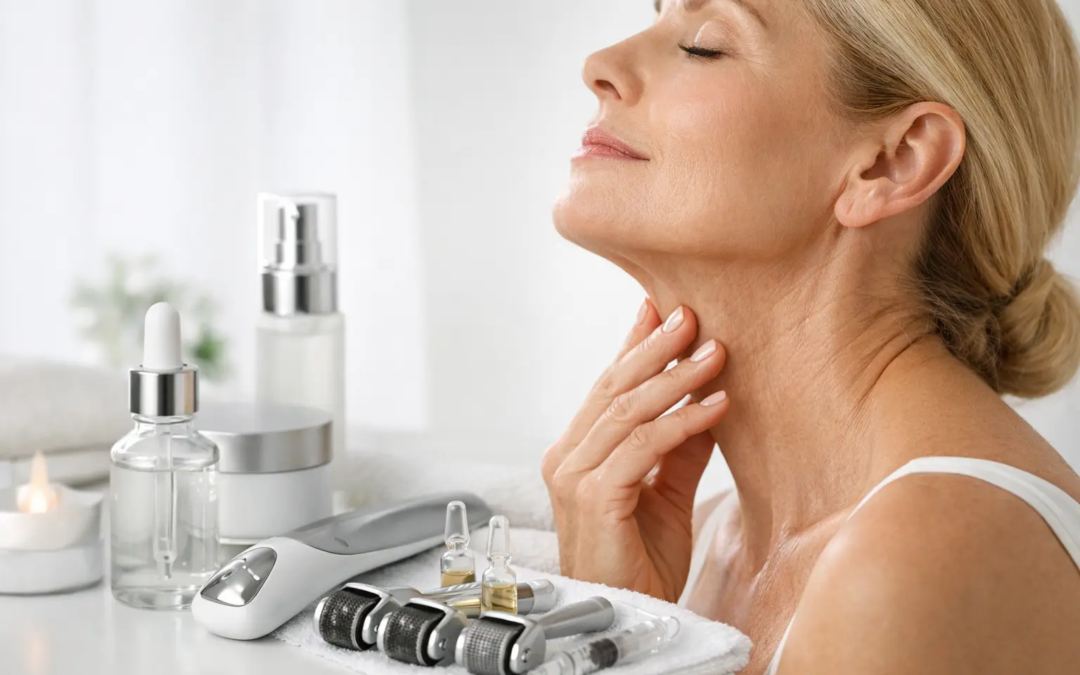
Microneedling is one of the most reliable options for crepey skin because it addresses the underlying issue rather than masking it. By creating controlled micro-injuries in the skin, it stimulates collagen production and supports smoother, firmer texture over time.
For patients with early to moderate crepiness, SkinPen® microneedling can be especially helpful on the face, neck, and chest. It is often a strong choice for people who want visible rejuvenation without surgery or extensive downtime. Results are not instant, and that is part of the trade-off. You are encouraging your skin to rebuild itself, so improvement tends to develop gradually through a series of sessions.
When appropriate, microneedling may also be paired with growth-factor support or PRP to enhance overall skin rejuvenation. That said, not everyone needs an upgraded protocol. Sometimes standard microneedling with a good home regimen is the more practical and cost-effective place to start.
Skin tightening for loose, thin-looking skin
When crepey skin is paired with visible laxity, energy-based skin tightening can make a meaningful difference. Treatments such as Ultraformer III work below the surface to stimulate collagen and create a firmer-looking appearance over time.
This type of treatment is often well suited for the lower face, jawline, neck, and certain body areas where skin has started to look loose as well as textured. It is a strong option for patients who want a non-surgical path and are looking for tightening without an overly aggressive approach.
The trade-off is patience. Like microneedling, collagen remodeling takes time. You may see some early improvement, but the fuller result develops gradually. For many patients, that is worth it because the change tends to look natural rather than abrupt.
Chemical peels for texture and surface renewal
Chemical peels can be very effective for crepey skin when dullness, rough texture, and sun damage are part of the picture. A professional peel removes damaged surface cells and encourages fresher, smoother skin to come forward. It can also improve the way light reflects off the skin, which makes crepiness look less obvious.
Peels are especially useful on the face, chest, and hands, where cumulative sun exposure often accelerates thinning and texture changes. The right strength matters. A peel that is too mild may not do enough, while one that is too aggressive for your skin can create unnecessary irritation.
For many patients, a series of customized peels works better than one intense treatment. That is often the smarter route for maintaining skin health while still targeting visible aging.
BroadBand Light for sun-damaged crepey skin
If crepey skin is accompanied by redness, brown spots, or uneven tone, BroadBand Light, or BBL™, may be part of the best strategy. While BBL is not primarily a tightening treatment, it can improve overall skin clarity and help reverse some of the visible effects of sun damage that make skin look older and more fragile.
This matters because crepey skin rarely exists in isolation. Patients often notice a combination of thinning texture, discoloration, and loss of radiance. In those cases, addressing tone along with texture tends to create a more complete result.
BBL is often most effective as part of a broader skin rejuvenation plan rather than as a stand-alone answer for advanced crepiness.
Medical-grade skincare still matters
Professional treatments usually do the heavy lifting, but home care is what protects and supports your results. If you want the best treatments for crepey skin to actually last, daily skincare cannot be an afterthought.
A well-designed home routine often includes a retinoid or retinol for collagen support, antioxidants to defend against environmental damage, and targeted hydration with ingredients that strengthen the skin barrier. Sunscreen is non-negotiable. In South Florida especially, unprotected UV exposure can quickly undo progress and continue breaking down collagen.
This is also where personalization matters. Some patients can tolerate active ingredients easily, while others need a gentler progression. More products are not always better. The goal is consistent, effective care that your skin can handle.
Treatments that help, but may not be enough alone
Hydrating facials, oxygen facials, dermaplaning, and microdermabrasion can all improve the look and feel of crepey skin temporarily by smoothing the surface and boosting radiance. They can absolutely have a place in a maintenance plan, especially for patients who want regular refreshment and better product absorption.
Still, these treatments are usually not the full answer if collagen loss and laxity are the main problem. They are supportive, not corrective. That does not make them unimportant – it just means expectations should be realistic.
What tends to work best in real life
In practice, the most successful treatment plans are often combination plans. A patient with neck crepiness and sun damage may do better with skin tightening plus a customized skincare regimen. Someone with chest crepiness and uneven pigment may benefit more from a peel series combined with light-based treatment. A patient with early facial crepiness may see excellent improvement with microneedling and medical-grade retinoids.
That is why one-size-fits-all advice can be frustrating. The best treatment is the one that addresses the reason your skin looks crepey in the first place.
When to start treatment
Earlier is easier. Once skin starts to lose firmness and develop that thin, crinkled look, intervention can help preserve and rebuild skin quality before changes become more advanced. That does not mean it is ever too late. It simply means mild to moderate crepiness is often more responsive than severe laxity.
A consultation is useful not because every patient needs an aggressive plan, but because the right starting point can save time and disappointment. Sometimes the best recommendation is a series of treatments. Sometimes it is skincare first. Ethical aesthetic care should tell you the difference.
At Medical Advanced Skin Care, that personalized approach is central to how treatment planning works – clinical beauty, real results, and recommendations built around your skin rather than a preset package.
Choosing the right provider for crepey skin care
Crepey skin can look simple, but treating it well takes judgment. The provider should understand how to balance resurfacing, collagen stimulation, hydration, and skin tolerance without over-treating. The goal is not just smoother skin for a week. It is healthier-looking skin that keeps improving.
If your skin has started to look thin, crinkled, or less resilient, the most effective next step is not guessing between trends. It is choosing a plan that respects your skin, fits your goals, and helps you look refreshed in a way that still feels like you.